

Key Takeaways
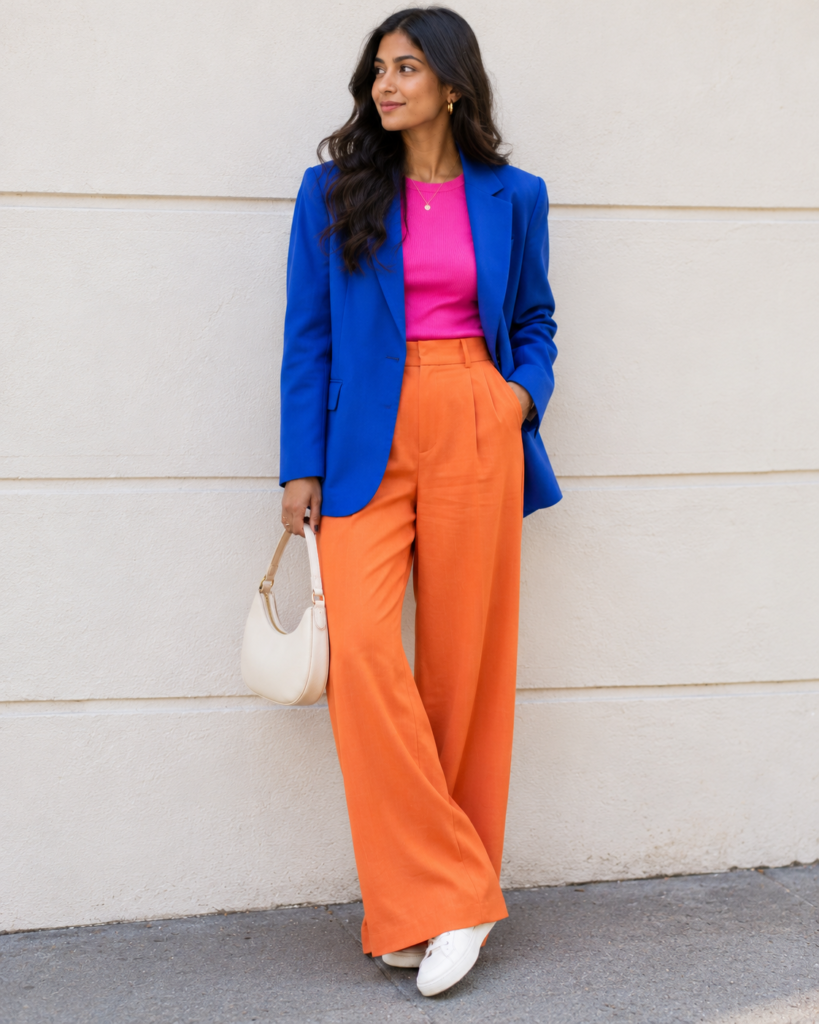
- Strong color block outfits usually focus on two dominant shades that create noticeable contrast.
- Modern color blocking often combines vibrant hues with neutrals for a more wearable everyday look.
- Solid colors and clean silhouettes help every shade stand out without relying on busy prints.
- Understanding color relationships makes it easier to create outfits that feel intentional and balanced.
Color blocking is one of the easiest ways to make a fashion statement while still keeping your wardrobe polished and modern. Instead of relying on patterns or heavy textures, this styling technique uses bold shades and contrasting tones to create visually striking outfits.
Today’s color block fashion goes beyond pairing bright colors together. Many modern outfits balance vivid shades with soft neutrals, helping the colors feel more refined and wearable for everyday style. Whether you’re experimenting with statement looks or simply refreshing your closet, color blocking offers endless opportunities to express personality through fashion.
Disclosure: This post may contain affiliate links. If you make a purchase through them, TheStyleArc may earn a small commission at no extra cost to you. Read our full Affiliate Disclosure.
Learn the Basics of Color Theory
Before mixing different shades together, it helps to understand how colors interact. Knowing the difference between complementary, analogous, and triadic color combinations makes styling much easier.
Analogous Colors
These shades sit next to each other on the color wheel, creating softer and more harmonious combinations. Pairings like teal with blue or burgundy with red feel balanced and naturally cohesive.
Complementary Colors
Complementary shades appear opposite one another on the color wheel. Blue and orange, yellow and purple, or green and red create dramatic contrast and instantly grab attention in an outfit.
Triadic Colors
Triadic combinations involve three evenly spaced colors on the wheel. Common examples include red, yellow, and blue or green, orange, and purple. These combinations feel bold while maintaining visual balance.
When building a color block outfit, choose one main focal shade first. From there, you can add supporting colors that complement or contrast with it naturally.
Expand Beyond Bright Colors
Traditional color wheels focus mainly on bright primary and secondary colors, but modern color blocking also works beautifully with neutral shades.
Brown tones often connect back to orange-based palettes, while grey shades commonly relate to blue undertones. Once you understand these relationships, it becomes easier to pair neutrals with bolder pieces in a way that still feels coordinated.
For example:
- Brown pairs beautifully with blues and purples.
- Grey works especially well with greens, blues, and muted yellows.
- Beige and cream tones help soften highly saturated outfits.
Using neutrals strategically allows bright colors to stand out without making the outfit feel overwhelming.
Start Simple with Neutral Foundations
If bold outfits feel intimidating at first, begin with a neutral base. White, black, beige, or denim pieces can act as a visual buffer between brighter shades.
A simple color block outfit could include:
- White blouse with bright trousers
- Black skirt paired with a colorful cardigan
- Beige pants styled with a vibrant blazer
- Neutral denim balanced with bold layered tops
This approach makes experimenting with color feel much easier while still creating a fashionable statement.
Try Ready-Made Color Block Pieces
You don’t always need to build a look from scratch. Many sweaters, dresses, tops, and skirts already feature built-in color block designs that make styling much simpler.
When wearing a bold color block sweater or blouse, balance the outfit with neutral bottoms like black trousers, white joggers, or classic denim. Likewise, brightly colored skirts work best with understated jackets and simple accessories.
The goal is to let the colors remain the focus of the outfit.
Common Color Blocking Mistakes to Avoid
Mixing Different Saturation Levels
Bright, vivid tones pair best with colors of similar intensity. Soft pastel shades usually work better with other muted tones instead of highly saturated colors.
Using Too Many Colors
Most successful color block outfits stick to two or three shades maximum. Too many competing colors can make the look feel chaotic rather than intentional.
Ignoring Shape and Structure
Because color is already the statement piece, clean silhouettes often work best. Minimal textures and streamlined cuts help the overall outfit feel polished and modern.