

Summer ends in a single moment. Yet your wardrobe doesn’t need to transform overnight. The secret to seasonal transition lies in layering. Therefore, you can carry summer pieces directly into fall by adding structured layers. Moreover, this approach works because it respects how seasons actually change. The shift from June to September happens gradually. Your clothes should follow the same logic.
Disclosure: This post may contain affiliate links. If you make a purchase through them, TheStyleArc may earn a small commission at no extra cost to you. Read our full Affiliate Disclosure.
The Summer vs Fall Contrast: Understanding Transition
Summer dressing prioritizes exposure. Bare shoulders, minimal coverage, lightweight fabrics dominate. Fall requires structure. Layers, defined silhouettes, and intentional coverage become essential. Yet these aren’t opposite approaches—they’re points on the same spectrum.
Consider a simple white linen dress. In July, it works alone with sandals and minimal jewelry. By September, the same dress becomes an underpinning. Add a structured blazer in camel or brown, and suddenly you have a sophisticated fall look. The dress hasn’t changed. Your styling has. Furthermore, this method costs nothing. You’re using pieces you already own. This kind of seasonal layering is exactly how wardrobes should evolve. You’re maximizing what you have. For more on building versatile pieces, explore building a sustainable capsule wardrobe.
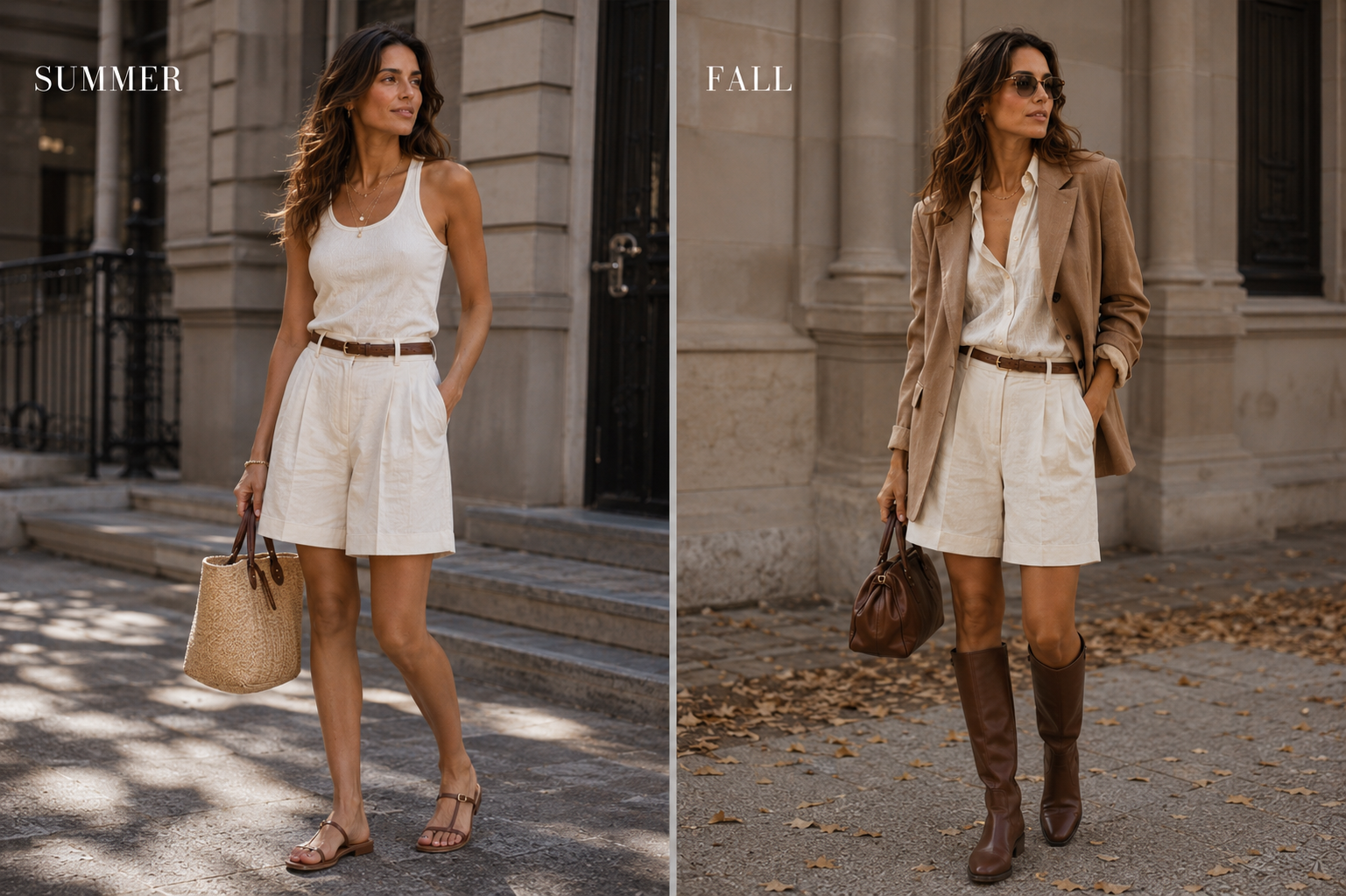
The same pieces, styled differently. Summer simplicity becomes fall sophistication through layering alone.
The Blazer Layer: Instant Sophistication
A structured blazer transforms any summer look in seconds. Wear it over a summer tank or simple shirt. The blazer creates visual weight that grounds lighter fabrics. Additionally, it introduces tailoring—a key fall aesthetic. Brown, camel, or neutral tones work best for this transition.
The blazer doesn’t need to match perfectly. In fact, intentional contrast works beautifully. A white linen shirt under a camel blazer reads effortlessly elegant. Yet the effect is immediate. You’ve moved from casual to refined. Therefore, invest in one quality blazer that spans seasons. Wear it open over anything. This single piece does the work of several outfits. For guidance on styling versatile pieces, see effortless styling that always works.
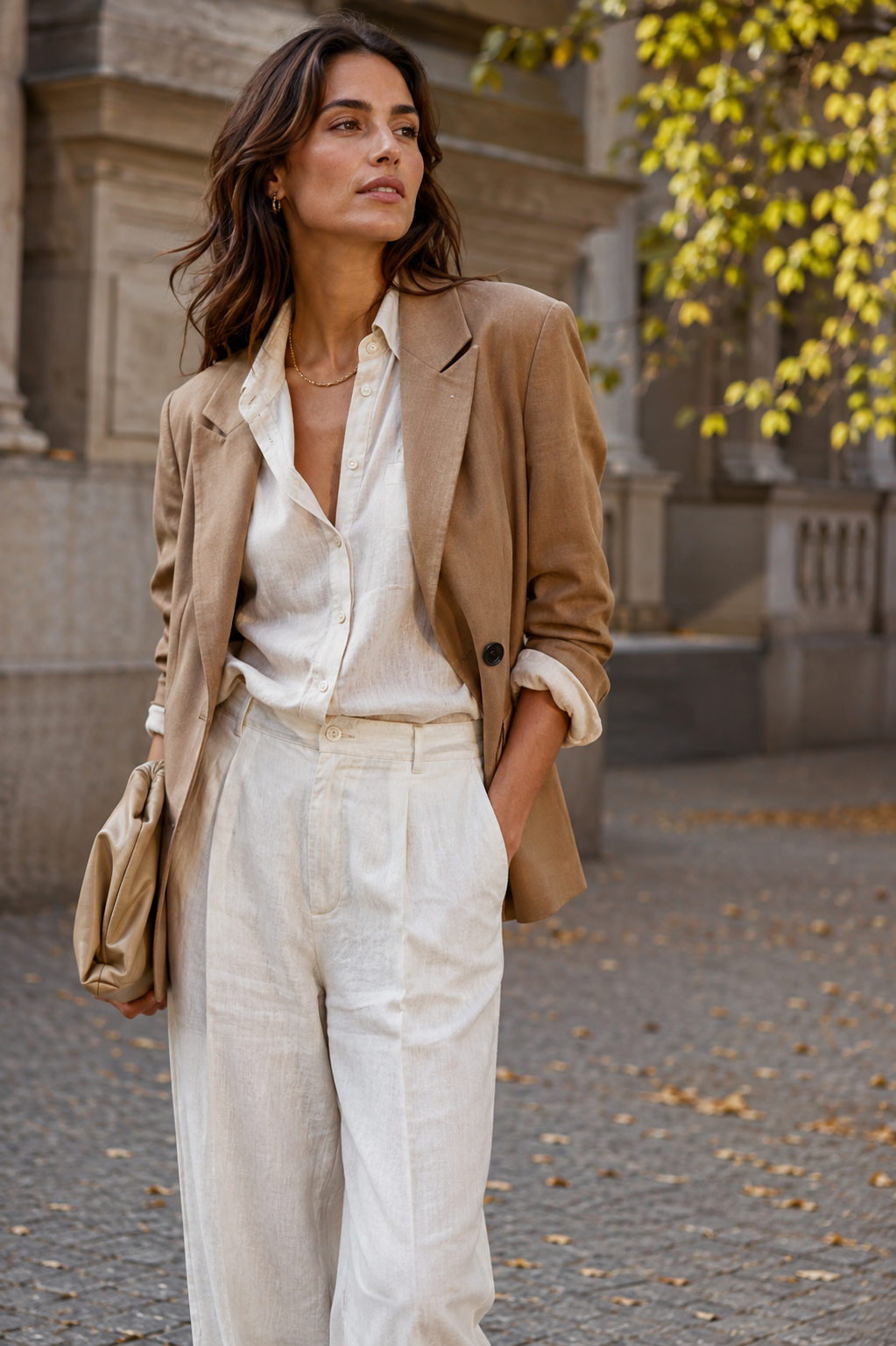
A blazer is the fastest path from summer to fall. It works over almost anything.
The Cardigan Layer: Soft Transition
If blazers feel too structured, try cardigans. Lightweight knit cardigans bridge summer and fall perfectly. Wear them over sleeveless tanks or simple shells. They add warmth without bulk. Moreover, they maintain the ease that summer dressing requires. Cardigans feel effortless. They drape naturally. They work open or buttoned.
A cream or beige cardigan over a white tank creates immediate seasonal shift. You’ve introduced texture. You’ve added layers. Yet nothing feels overdone. The look remains accessible and simple. Furthermore, cardigans work across body types and age ranges. They’re universally flattering. Reach for a slightly oversized style to emphasize the ease and modern silhouette that 2026 demands. For more on transitional layering, check layering techniques that work across seasons.
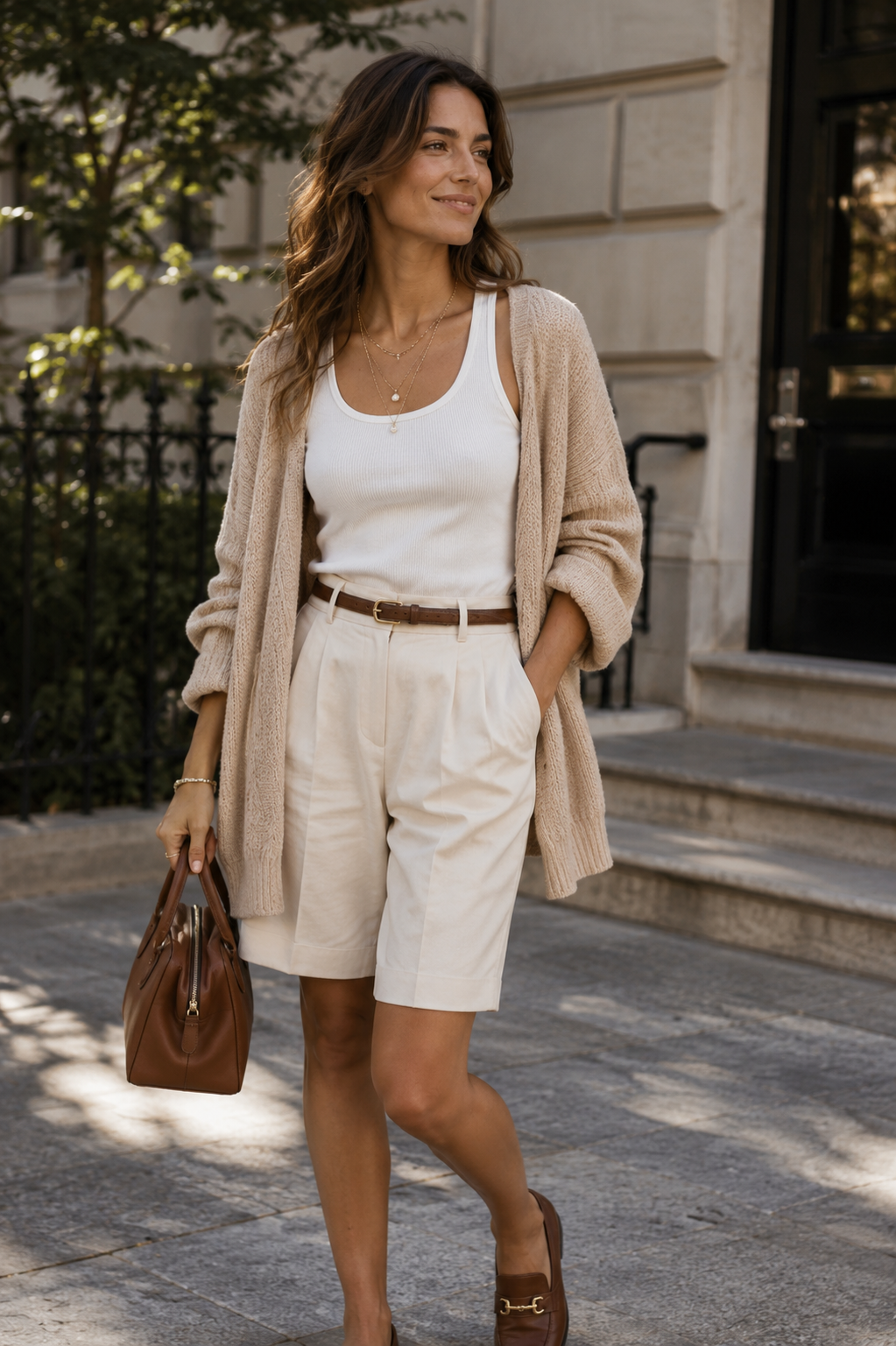
Cardigans create the softest transition. They add coverage while maintaining summer’s ease.
The Shirt Layer: Double Sleeves Done Right
This technique requires confidence but creates stunning results. Wear a short-sleeved linen shirt over a long-sleeved shirt. The double-sleeve effect looks intentional rather than accidental. Yet it requires understanding proportion. Keep both shirts fitted or both slightly loose. Avoid mixing a tight layer under an oversized layer—it reads confused.
This approach works because it shows layering logic. You’re not adding random pieces. You’re demonstrating that every layer serves proportion or coverage. Therefore, choose neutral tones or subtle color contrast. White over cream works beautifully. Natural linen tones over white creates quiet interest. Meanwhile, this technique teaches an important styling principle: layers should create visual conversation, not visual confusion. The reader should understand why each piece is there. For more on proportion-based styling, explore formulas that balance proportion.
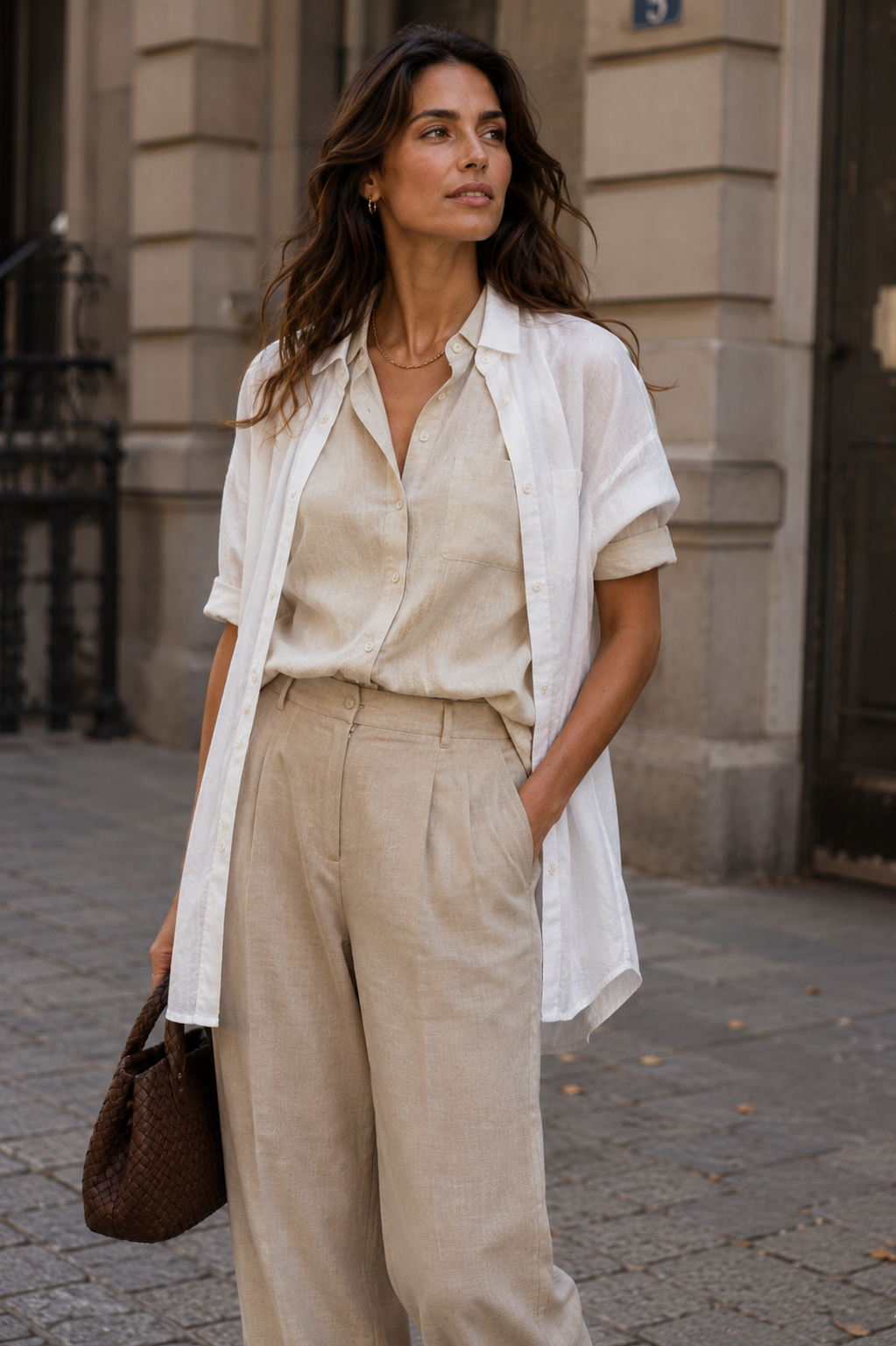
Double sleeves show layering intention. Proportion and color harmony make this technique work.
The Dress-to-Coat Transition: Complete Transformation
Your summer dresses don’t disappear in fall. They transform. A sleeveless linen dress becomes a complete outfit when paired with a structured blazer or coat. The dress functions as the underpinning. The outer layer provides structure and warmth. This approach maximizes your existing pieces. You’re not buying new items—you’re styling differently.
The key is proportion matching. An oversized blazer over a fitted dress creates visual balance. A structured coat worn open over a flowing dress maintains proportion harmony. Thus, you create looks that feel intentional and refined. Furthermore, this technique proves that seasonality isn’t about new clothes—it’s about styling strategy. A dress you wore in July works perfectly in September. Only the context changes. Pair it with fall boots instead of sandals. Add jewelry for more structure. This is sustainable, economical, and stylish all at once.
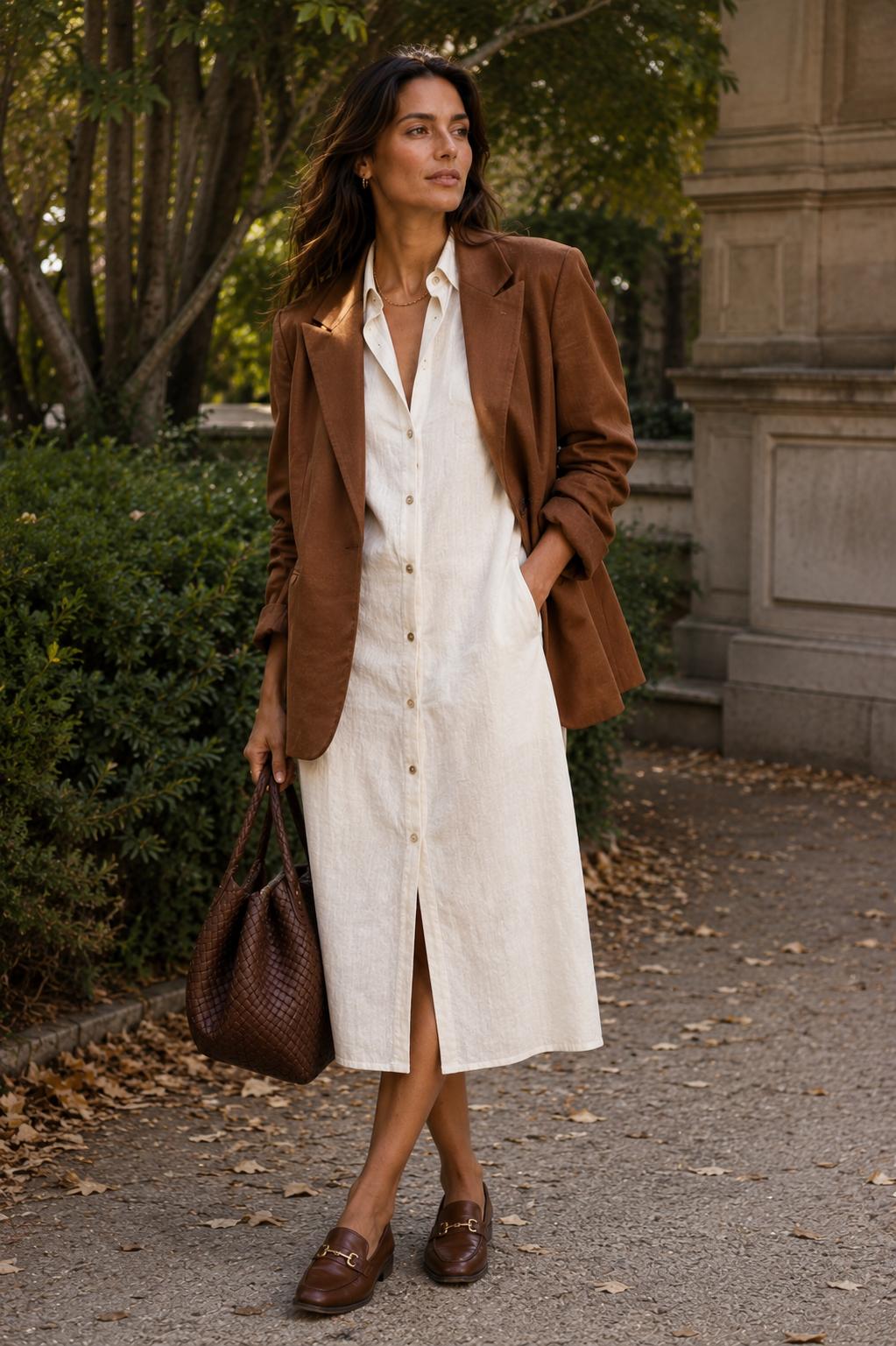
Dresses transition to fall through layering. A blazer transforms them into sophisticated seasonal looks.
The Transition Principle: Why This Works
Seasonal layering works because it respects two truths. First, seasons transition gradually. Second, well-made pieces deserve multiple seasons of wear. Therefore, learning to layer means extending every garment’s life. You wear summer pieces longer. Fall pieces last into early winter. Your wardrobe becomes more efficient. Additionally, this approach aligns with quiet luxury values. Quality pieces matter more than quantity. You style thoughtfully. You respect what you own.
The transition from summer to fall happens in weeks, not days. Your clothes should reflect that reality. Layering allows gradual evolution. In early September, wear cardigans and light blazers. By mid-September, add structured coats. By October, summer pieces retire to storage. Meanwhile, you’ve stretched every piece. You’ve maximized your investment. Thus, you’ve created a wardrobe that actually works year-round. This is the foundation of sustainable, intentional dressing.