

There’s a misconception that classic jewelry elements—pearls, diamonds, and gold—belong strictly to formal occasions or conservative wardrobes. But in 2026, the most stylish women are proving something entirely different: pearls and diamonds aren’t precious heirlooms locked away; they’re everyday luxury that makes jeans and a lace top feel instantly elevated.
The art lies in knowing how to blend these three elements—gold, pearls, and diamonds—in a way that feels current, not matriarchal. It’s about choosing the right pearl style (think Y-shaped pendant, not grandmother’s strand), pairing diamonds with texture, and letting gold be the unifying force that ties everything together. When done right, this combination reads as effortlessly luxe rather than overly formal.

Disclosure: This post may contain affiliate links. If you make a purchase through them, TheStyleArc may earn a small commission at no extra cost to you. Read our full Affiliate Disclosure.
Why Pearls and Diamonds Are Having a Modern Moment in 2026
Pearls spent years being perceived as either wedding jewelry or grandmother pearls. But contemporary designers have completely reimagined how pearls function in modern styling, and young women are paying attention.
The Y-shaped pearl pendant has become the signature piece of 2026—it’s elegant without being fussy, contemporary without sacrificing sophistication. Unlike traditional pearl strands that hit a specific point on your neck, a Y-necklace drapes differently, catches light in surprising ways, and photographs beautifully. It’s a pearl piece that doesn’t require an occasion; it requires only intention.
Diamonds, too, have evolved. They’re no longer reserved for engagement rings or special events. Modern styling embraces diamond-accented rings worn daily, diamond-studded bracelets paired with casual outfits, and small diamond details that add quiet luxury without announcing themselves.
And gold? Gold is the thread that ties pearls and diamonds together. It’s warm enough to complement pearls’ lustrous quality, bright enough to make diamonds sparkle without competing, and timeless enough to work across decades and styles. Gold transforms pearls and diamonds from “formal” into “effortlessly luxe.”
The Pearl Pendant: Reimagining an Heirloom Element
Why Y-Shaped Pearl Necklaces Rule 2026
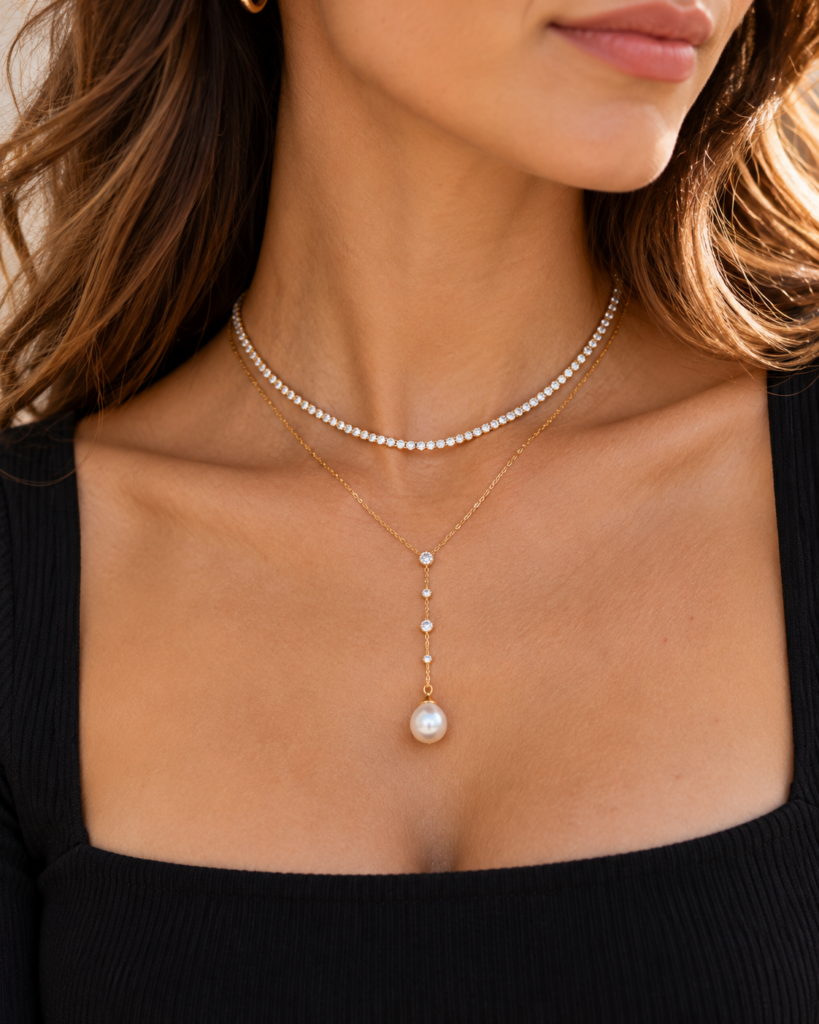
The Y-shaped pearl pendant is the perfect marriage of classic and contemporary. The structure—where a single pearl hangs from a Y-shaped chain—creates movement and visual interest that traditional pearl strands simply cannot match.
A Y-necklace sits differently on different bodies. On some, it drapes to the sternum; on others, slightly lower. This natural variation means it adapts to your individual frame rather than demanding a specific proportional relationship. It works with strapless necklines, with crew necks, with open shirts, with everything.
The pearl itself matters. Freshwater pearls have a softer, more organic luminescence than their formal counterparts. They’re often slightly asymmetrical, which adds to their contemporary feel. When paired with a gold chain rather than a formal metal, even a traditional pearl reads as modern.
What makes this pendant work for everyday wear: it doesn’t demand formal clothing. Wear it with a lace crop top and black trousers for effortless elegance. Wear it with jeans and a white tee for casual sophistication. The pearl pendant works because it’s self-contained—it makes a statement without requiring anything else to validate its presence.
Diamond-Accented Rings: Luxury That Whispers
The gold rings in this styling aren’t uniform. Some are textured, some are smooth, some feature diamond pavé settings. This variation is crucial because it prevents your hand from looking like a solid block of metal. Instead, each ring catches light differently, creates its own visual story.
Diamond-accented rings work beautifully for everyday wear because diamonds are ultimately understated. They don’t demand the attention of a colored gemstone. They simply add luminescence. A diamond pavé band catches light and adds elegance without the “statement ring” energy that might feel overdressed with casual clothing.
The key to wearing multiple diamond rings: let one be the focal point. Maybe your middle finger hosts the most ornate diamond setting; your other rings support it with simpler designs or pure gold texture. This hierarchy prevents visual chaos.
Gold transforms how diamonds read. With white metal, diamonds feel more formal, more “occasion-specific.” With warm gold, those same diamonds become versatile. They work at work, at brunch, at evening events. Gold is the enabler that lets diamonds shift from formal to everyday.
Gold Bracelets: The Balancing Element
When your neck features pearls and your hands feature diamonds, your wrist needs to be the visual bridge. This is where gold bracelets earn their place.
A textured gold bracelet—whether hammered, woven, or patterned—serves multiple functions. It echoes the gold in your rings, creating visual continuity. It adds tactile interest. It catches light in a different way than rings, creating dimension around your wrist. Most importantly, it prevents your overall aesthetic from becoming too “matchy-matchy.”
Layering bracelets works when they’re all gold. A slightly heavier textured bracelet paired with a delicate chain bracelet creates visual interest without feeling chaotic. The key is proportion: if one bracelet is very substantial, keep others more delicate.
How Pearls, Diamonds, and Gold Work Together
Looking at these pieces worn together, notice the visual flow: your eye travels from the pearl pendant at your neckline to the diamond-accented rings on your hands to the gold bracelets at your wrists. Everything connects through the gold, but each element maintains its own presence.
The lace top isn’t coincidental. Delicate lace has its own visual texture, which means your jewelry can be more substantial without overwhelming the outfit. The black trousers ground everything, preventing the look from feeling overly feminine or fussy. This is how pearls and diamonds become everyday luxury: they’re balanced by clothing choices that feel current and casual.
Notice, too, that none of the individual pieces shout. The pearl is modest. The diamonds are accented rather than featured. The gold is warm but not yellow. It’s the cumulative effect—these elements working in concert—that creates the “effortlessly luxe” feeling.
Wearing Pearls, Diamonds, and Gold for Every Moment
Office and Professional Settings
In professional environments, this combination is absolutely appropriate. A pearl pendant reads as polished. Diamond rings suggest quality and attention to detail. Gold is warm and approachable without being casual. This isn’t overdressed; it’s intentionally styled.
At work, you might choose slightly smaller diamonds and let the pearl necklace be your statement piece. Or you might skip the necklace entirely and let your ring stacking speak for itself. The flexibility is one of the great advantages of this combination.
Casual and Weekend Wear
This is where pearls, diamonds, and gold truly shine. A pair of jeans and a simple top become instantly elevated. A lace crop top and black trousers read as deliberately styled. Weekend brunching feels more intentional with a pearl pendant and diamond-accented rings.
The casual setting lets you take more risks. Maybe you layer more bracelets. Maybe you stack more rings. Maybe you wear multiple necklaces alongside the pearl pendant. Casual contexts give you permission to be more expressive with jewelry.
Evening and Formal Occasions
For evening events, this combination is unquestionably appropriate. Pearls have formal credentials. Diamonds are inherently elegant. Gold is luxurious. Together, they’re sophisticated without being stuffy.
For formal occasions, you might choose pearl earrings to complement your Y-pendant necklace. You might opt for slightly larger diamond-accented rings. You might layer additional bracelets. But the foundation remains the same—pearls, diamonds, and gold working in harmony.
Investing in Pearls and Diamonds That Last
Pearl Quality and Selection
Not all pearls are created equal. Freshwater pearls are more affordable and more organic in appearance than saltwater pearls. They’re perfect for contemporary styling because their slight irregularities add character. Saltwater pearls are more uniform and lustrous, which reads more formal.
For everyday wear with a Y-pendant, freshwater pearls are ideal. Their natural variation means each piece is unique. Their slightly softer sheen feels less formal. Choose pearls that feel warm to you—this is entirely subjective and matters more than objective “quality.”
Size matters for Y-pendants. A pearl that’s too small gets lost at your neckline. A pearl that’s too large can feel overwhelming with casual clothing. Medium-sized pearls (roughly 8-10mm) work best for versatility.
Diamond Selection for Everyday Wear
For rings you’ll wear daily, clarity and color matter less than with statement diamonds. A slightly included diamond with warm tones actually looks better in everyday lighting than a technically perfect stone. What matters is that the diamonds catch light and add visual interest.
For diamond-accented rings (pavé settings), focus on the overall design rather than individual stone quality. Pavé diamonds should create a cohesive lustrous surface, not individual sparkles. If you’re examining each stone individually, you’ve chosen a setting that demands too much scrutiny for everyday wear.
Consider your lifestyle. Active lifestyle? Choose secure settings where diamond clusters are integrated into metal rather than sitting atop it. Delicate wrist? Maybe choose more delicate diamond details.
Gold Tone Considerations
Pearls work beautifully with all gold tones, but warm yellow gold creates the most harmonious visual effect. Rose gold works if you prefer cooler undertones. White gold is technically fine but can make pearls look washed out in certain lighting.
The most important thing: keep your gold consistent. If your pearl pendant is yellow gold, make sure your rings and bracelets match. Mixed gold tones (yellow and rose, for instance) create visual complexity that competes with the pearls and diamonds rather than supporting them.
What NOT to Do When Mixing Pearls, Diamonds, and Gold
Don’t mix pearl styles. A Y-pendant paired with pearl earrings reads beautifully together. A Y-pendant paired with traditional pearl studs and a pearl bracelet reads overcomplicated. Choose one pearl focal point and let other jewelry be simpler.
Don’t choose diamonds that demand attention. A yellow diamond ring might feel luxe, but it competes visually with the pearl. Clear or white diamonds work better because they enhance without competing.
Don’t overthink texture. If your rings are heavily textured, keep your bracelets simpler. If your bracelets are detailed, let your rings be smoother. Balance prevents visual chaos.
Don’t ignore proportion. If you’re wearing a substantial pearl pendant, you can layer smaller pieces on your hands. If your rings are bold, keep your necklace more delicate. One element should be slightly more prominent than others.
Don’t mix metals with your jewelry. While gold works with other metals in your wardrobe (silver watches, steel accessories), your jewelry itself should stay gold-consistent. The pearls and diamonds do enough visual work without metal confusion.
Keeping Your Pearls and Diamonds Beautiful
Pearl Care: Pearls are delicate. Avoid harsh chemicals, extreme heat, and abrasive scrubbing. Store them separately from harder jewelry to prevent surface scratching. Wipe pearls gently with a soft cloth after wearing them. Have your pearl necklace professionally inspected annually to ensure the string is secure.
Diamond Care: Diamonds are durable but still require gentle cleaning. Use warm water and mild soap with a soft brush for diamond rings. Avoid exposing diamonds to sudden temperature changes. Have your diamond settings professionally inspected yearly to ensure stones are secure.
Gold Maintenance: Gold develops a beautiful patina with age. Regular wear actually polishes gold naturally. Professional cleaning once yearly keeps your pieces looking their best. Store gold jewelry in soft pouches to prevent scratching.
Your Pearl and Diamond Jewelry Questions Answered
Q: Can I wear freshwater and saltwater pearls together?
A: Technically yes, but it’s not recommended for polished looks. The visual difference is noticeable and reads as accidental rather than intentional. Choose one pearl type for your primary pieces.
Q: Are cultured pearls real pearls?
A: Yes. Cultured pearls are real pearls. The difference from natural pearls is that humans initiate the process, but the pearl itself is genuine. For everyday wear, cultured pearls are actually preferable because they’re more affordable and more durable.
Q: How do I know if my diamonds are real?
A: For peace of mind with significant diamond purchases, request a diamond certification from a reputable gemologist. For smaller diamond accents (like pavé rings), the setting security matters more than individual stone certifications.
Q: Can I wear this combination with other jewelry metals?
A: Your pearl and diamond jewelry should stay in gold for visual coherence. Other jewelry (like watches or bracelets in different metals) can mix with your overall outfit, but your jewelry collection itself should maintain gold consistency.
Q: Is it appropriate to wear pearls and diamonds to casual events?
A: Absolutely. The styling in these photos proves that pearls and diamonds work for casual contexts. It’s all about choosing modern pieces (like Y-pendants instead of strands) and pairing them with contemporary clothing.
Q: How many diamond rings is too many?
A: There’s no specific number. What matters is that each ring is visible and distinct. If you stack rings so densely that they blur together, you’ve reached too many. Usually 3-5 rings across both hands is the optimal range.
Pearls, Diamonds, and Gold: Modern Luxury Defined
The formula for wearing pearls and diamonds in 2026 isn’t about formality or occasion. It’s about understanding that classic elements can be contemporary, that luxury doesn’t require an event, and that elegance comes from how you combine pieces rather than which pieces you own.
A Y-shaped pearl pendant is approachable. Diamond-accented rings are versatile. Gold bracelets are everyday wear. Together, they create an aesthetic that whispers rather than shouts, that feels intentional rather than inherited, that works for morning coffee and evening celebrations alike.
The real luxury isn’t in the individual components. It’s in the knowledge that you can take your grandmother’s classic elements and make them entirely your own. That’s what makes this combination so powerful: it’s both timeless and of-the-moment, both formal and casual, both inherited and entirely new.
Expand Your Jewelry Styling Expertise
Continue your jewelry journey with our complete collection: