

Evening dresses require different thinking than everyday wear. The stakes feel higher. The occasion demands elegance. Yet most people overthink the selection process. Therefore, choosing an evening dress becomes simpler when you understand a few core principles. Color, silhouette, and neckline handling matter most. Everything else follows naturally from these choices.
Disclosure: This post may contain affiliate links. If you make a purchase through them, TheStyleArc may earn a small commission at no extra cost to you. Read our full Affiliate Disclosure.
Black vs White Evening Elegance: The Classic Choice
Black and white represent opposite approaches to evening dressing. Yet both work perfectly. Black reads as timeless sophistication. It demands minimal accessories because the dress itself carries authority. White feels fresh and modern. It works for late spring through early fall events. The choice depends on your comfort level and the occasion formality.
A black evening dress with clean lines creates immediate polish. The color itself does the work. You need only quality shoes and a structured bag. Moreover, black photographs beautifully and hides any styling imperfections. Conversely, white requires intentionality. It demands that every piece coordinates perfectly. Yet white allows more personality. You can layer with color or interesting accessories. Black remains the safest choice for formal events. Yet white shows confidence and stylistic understanding. For more on this principle, explore effortless styling that always works.
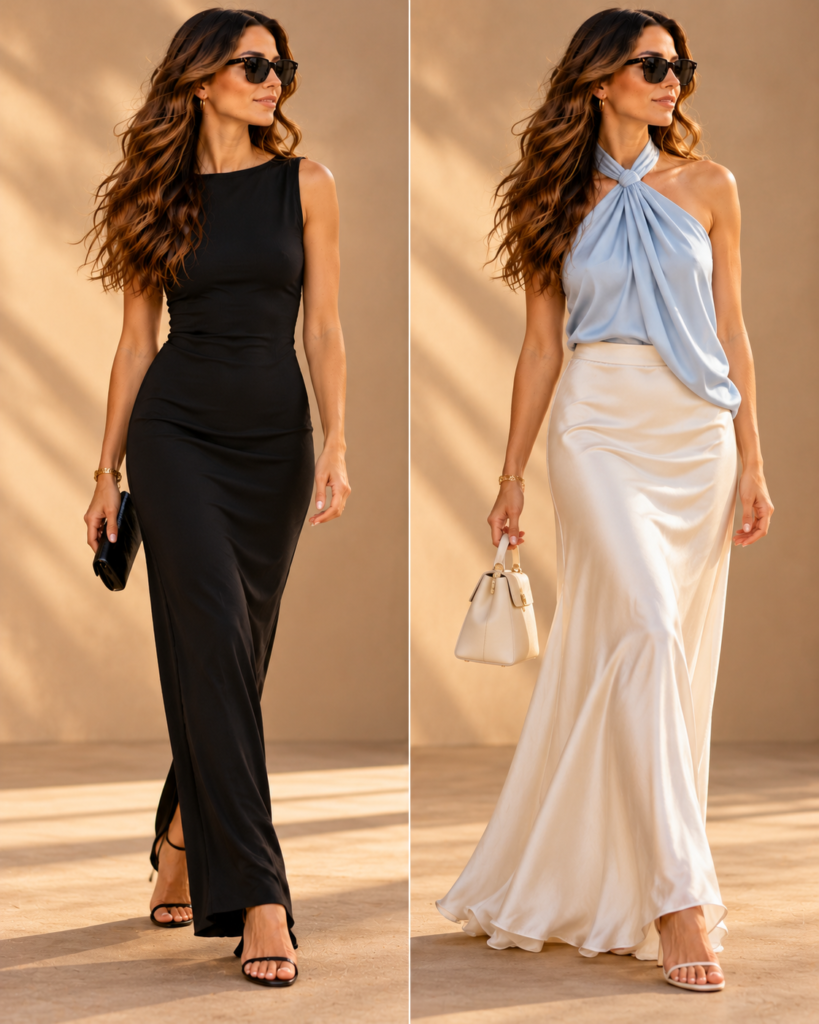
Black and white represent two paths to evening elegance. Both require understanding, but different approaches work best for each.
Structured vs Playful Silhouettes: Finding Your Shape
Evening silhouettes fall into two camps: structured and flowing. Structured dresses use tailoring and seaming to create defined shapes. They emphasize your body’s natural lines. Playful dresses embrace volume and movement. They prioritize ease over definition. Neither is superior. The choice depends on which approach makes you feel confident.
A mini dress with sharp tailoring reads youthful and modern. It works for younger crowds and contemporary venues. Furthermore, it shows off legs and creates visual lightness. A longer dress with gathered skirts or dramatic volume reads romantic and sophisticated. It works across age groups and formal settings. Moreover, it creates movement and fluidity that photographs beautifully. Therefore, consider the venue and your personal aesthetic. Do you want to emphasize your silhouette? Choose structured. Do you want to feel supported and elegant? Choose flowing. For more on maintaining elegance while choosing proportions, explore how to style with sophistication.
Structured silhouettes emphasize form. Flowing silhouettes celebrate ease. Both create elegance through different paths.
Romantic Florals: Soft Sophistication
Floral evening dresses occupy an interesting space. They feel less formal than solids, yet remain elegant. The print adds personality and visual interest. Additionally, florals work beautifully for spring and summer events. They photograph wonderfully and create immediate mood.
The key is choosing florals that lean romantic rather than whimsical. Dark florals on cream or neutral grounds feel sophisticated. Busy or overly bright prints read costume-like. Therefore, pay attention to scale. Large florals feel dramatic. Small prints feel delicate. Medium-scale florals hit the sweet spot. Furthermore, draping matters with florals. An unstructured neckline complements romantic prints beautifully. A fitted bodice grounds busy patterns. This balance prevents the entire look from feeling chaotic. Thus, floral dresses work best when paired with minimal jewelry and simple shoes. Let the print do the storytelling. For more on romantic styling approaches, check boho and romantic outfit ideas.
Romantic florals add personality while maintaining elegance. Scale and draping determine whether the look feels sophisticated or costume-like.
Elegant Evening Details: Halter and Draped Necklines
Neckline details transform how an evening dress reads. Halter necklines create sophisticated angles. They emphasize shoulders and neck. Draped necklines add movement and fluidity. They work for multiple body types because they create softness. Both approaches create visual interest without requiring additional jewelry.
A halter dress works best when the rest remains minimal. Keep lines clean. Avoid competing details. The neckline carries the interest. Meanwhile, draped necklines allow for slightly more complexity because the draping itself provides visual movement. You can pair them with structured jewelry or belt details. However, restraint remains important. In fact, the most elegant evening looks use one strong detail. Whether that detail is dramatic neckline, interesting silhouette, or printed pattern, everything else should support it. Therefore, when choosing an evening dress, identify the strongest design element. Then build your accessories around supporting that element rather than competing with it. This discipline creates looks that feel intentional and refined. For more on this principle of elegant simplicity, explore minimalist jewelry and elegant restraint.
Special necklines create instant sophistication. Halter and draped styles allow you to minimize jewelry while maximizing elegance.
The Evening Dress Principle: One Strong Element
Evening dressing differs from casual styling. Simplicity becomes more important, not less. Your evening dress should work as a complete statement. Therefore, resist the urge to add numerous accessories or competing details. Instead, choose dresses with interesting construction. Let tailoring, neckline, or silhouette carry the visual weight. Then step back and let the dress work.
This approach feels counterintuitive in a fashion world that celebrates maximalism. Yet sophisticated dressing embraces restraint. A single strong element creates more impact than scattered details. Thus, when selecting an evening dress, ask yourself: What makes this dress special? Is it the color? The silhouette? The neckline? The print? Once you identify that element, build everything else around supporting it. This discipline separates truly elegant evening looks from those that feel overdone.