

Jewelry layering isn’t about wearing every piece you own.
It’s about combining multiple pieces with intention. The right combination makes your entire look polished and thoughtful. The wrong one? It looks cluttered. Therefore, mastering jewelry layering is a game-changer for your personal style.
When you understand the foundational principles, your jewelry collection transforms. Every single piece works harder for you. You create more looks with less. Moreover, you build confidence in your personal aesthetic.
Disclosure: This post may contain affiliate links. If you make a purchase through them, TheStyleArc may earn a small commission at no extra cost to you. Read our full Affiliate Disclosure.
Understanding Jewelry Layering Basics
Before you start stacking, understand why some combinations work and others don’t. Jewelry layering follows the same principle as everything in fashion: undertone harmony matters. Your skin undertone affects which metals look best on you.
When you choose jewelry matching your undertone, all your pieces work together seamlessly. Furthermore, this consistency is the secret to looking polished and intentional.
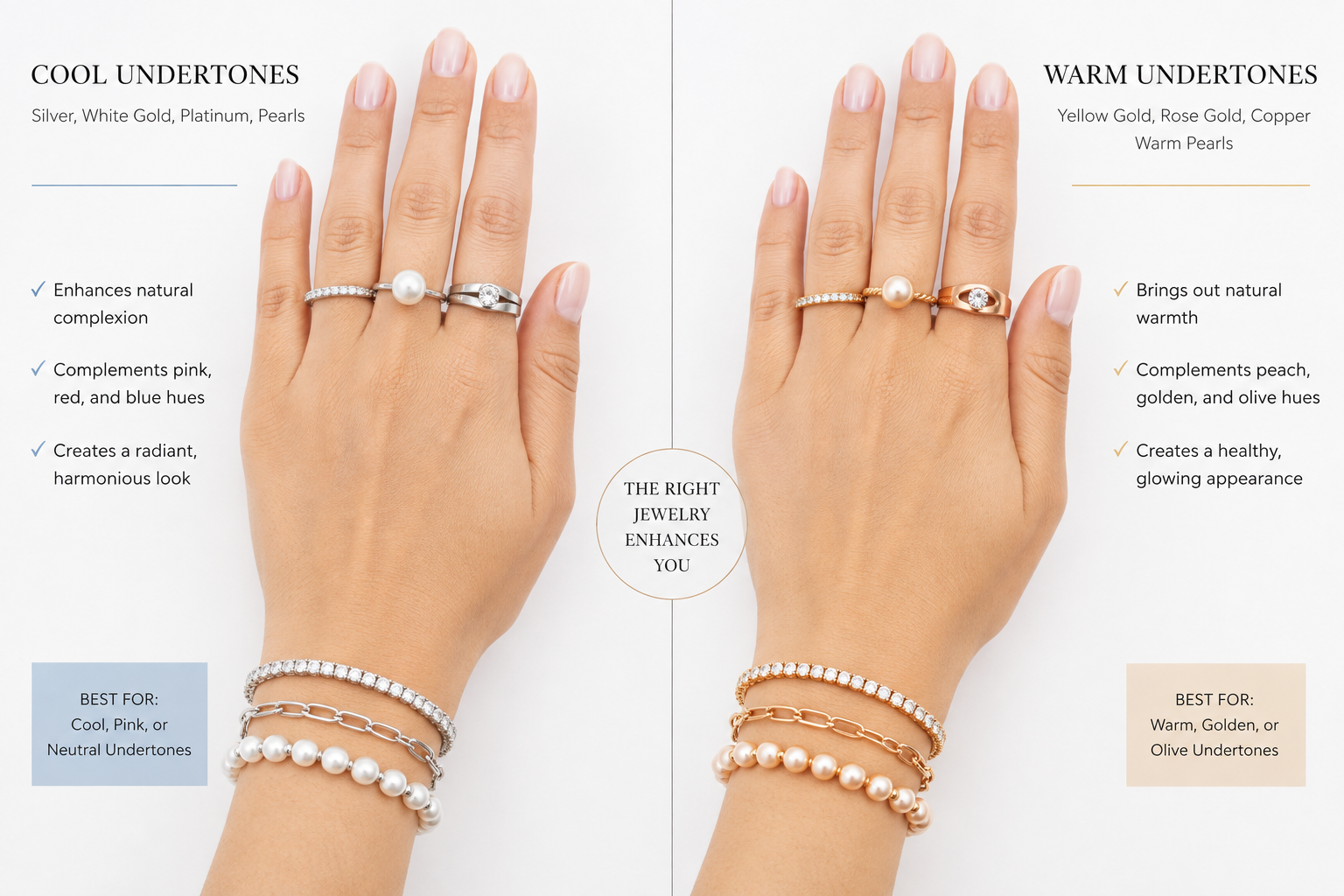
Cool undertones look luminous in silver, white gold, platinum, and pearls. Warm undertones glow in yellow gold, rose gold, and golden pearls. This comparison shows why undertone matching matters—it’s the foundation of successful layering.
Cool Undertones: Silver and Platinum
Stick with silver, white gold, platinum, and white pearls. These metals enhance your natural coloring. Additionally, diamonds and colorless gemstones complement cool tones beautifully. Silver, Pearls, and Diamonds explores cool-toned combinations in depth. When you commit to cool metals, every piece you layer works together harmoniously.
Warm Undertones: Gold and Rose Gold
Focus on yellow gold, rose gold, copper, and golden pearls. These metals create warmth and glow on your skin. Warm gemstones like citrine, amber, and warm diamonds enhance warm undertones beautifully. Therefore, Gold, Pearls, and Diamonds shows warm-toned layering in action. Consistency in metal choice is your secret to polished looks.
The Mixing Rule: Commitment First
Once you choose your undertone family, stay committed. Mixing cool and warm metals is possible, but it requires intention and balance. However, beginners should choose one metal family and build everything within that foundation. Undertone consistency creates the most sophisticated looks. Therefore, make this your non-negotiable rule.
The Art of Bracelet Stacking
Bracelet stacking is where most people begin their layering journey. Your wrist is forgiving. You can experiment without overwhelming your entire look.
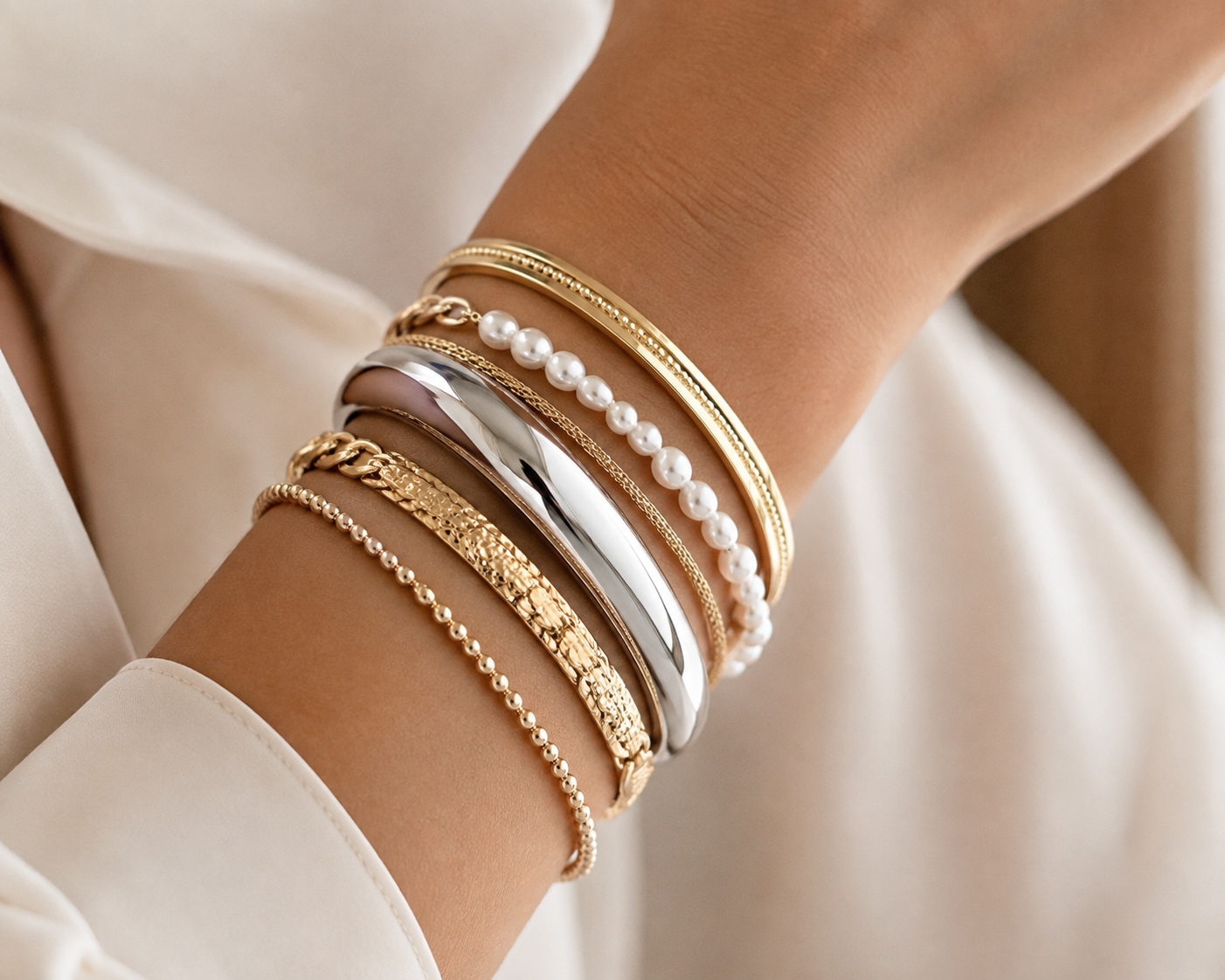
This example shows four bracelets stacked together: thin chains, a textured bangle, pearls, and another delicate chain. Notice how they’re coordinated in color and tone. All warm metallics with pearls. This creates harmony rather than chaos.
Width Variation Creates Balance
Never stack five bracelets of the same width. Mix chunky with delicate pieces. One thick bangle paired with three thin chains looks intentional. Five bangles of equal width looks like you grabbed everything at once. Moreover, the contrast in width creates visual interest and depth. Additionally, it prevents your wrist from looking flat or boring.
Color and Material Coordination
Mix metals thoughtfully. Two gold chains plus pearls plus rose gold works beautifully. However, two gold plus silver plus rose gold starts to feel chaotic. When mixing materials, repeat them: if you use pearls, use them again. If you stack chains, add a second chain. Therefore, repetition creates visual cohesion. This principle transforms random pieces into curated collections.
The Odd Number Rule
Three bracelets look intentional. Four can work. Five gets crowded. Two feels incomplete. Therefore, aim for three or five as your sweet spot. Additionally, consider your wrist size. Delicate wrists look best with three thin bracelets. Fuller wrists can carry four or five pieces comfortably.
Spacing Prevents Tangling
Don’t bunch all your bracelets together. Spread them around your wrist instead. Leave small gaps between pieces. This prevents tangling and creates a polished appearance. Your bracelets should look like a curated collection, not an afterthought.
Ring Stacking and Finger Distribution
Ring layering intimidates people more than bracelet stacking. How many rings can you wear? Which fingers should hold them? These answers are simpler than you think.
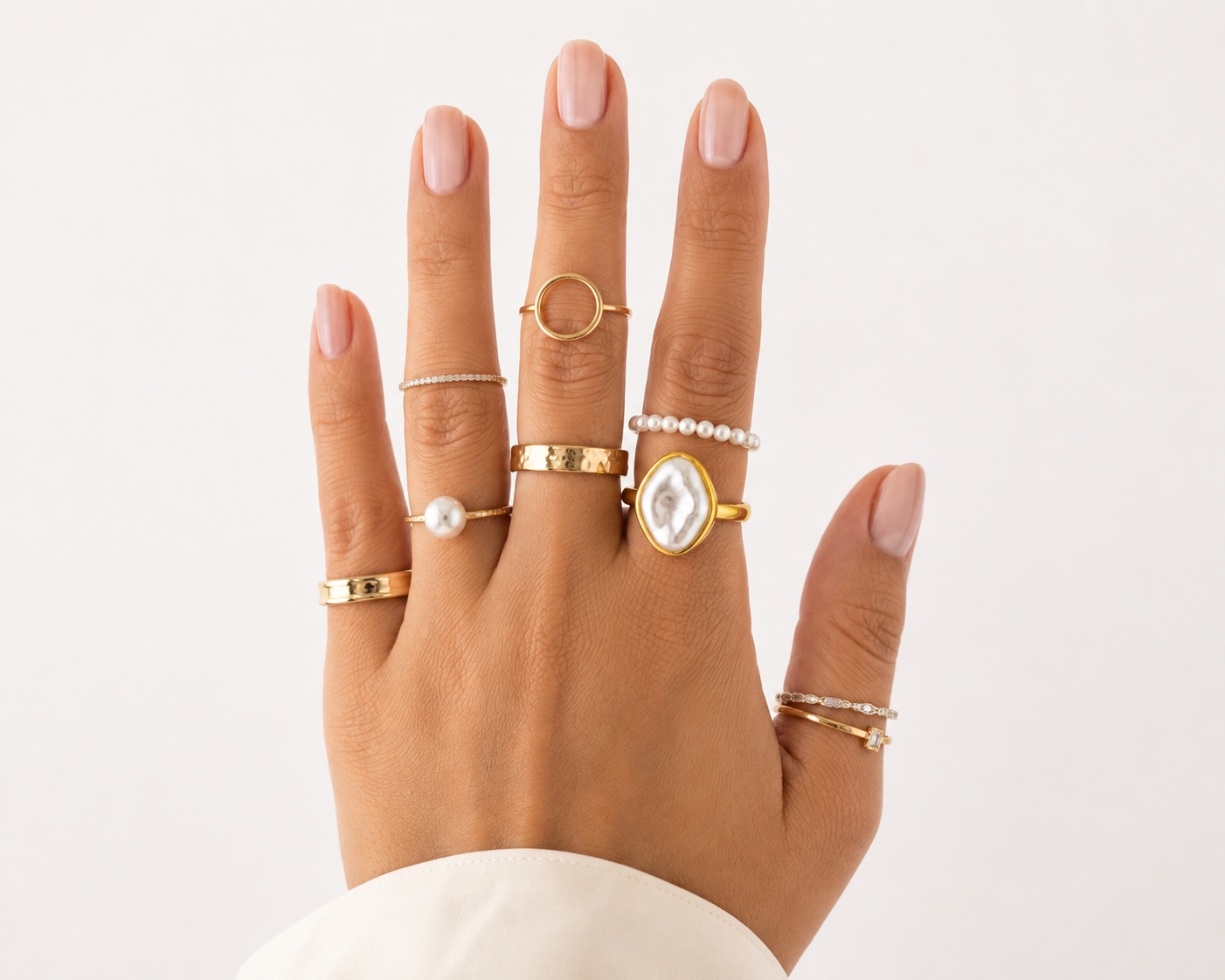
This hand shows five rings distributed across multiple fingers: pearls, geometric shapes, gold squares, and delicate bands. Notice how they’re spaced strategically. Not all on one finger. This creates balance and sophistication.
The Uneven Number Rule for Rings
Wear three rings or five rings. Never four. Three feels intentional. Five feels like a collection. Four sits awkwardly in the middle. Moreover, distribute them across both hands when possible. Two rings on one hand and three on the other looks more balanced than wearing all five on one hand. Therefore, asymmetry creates visual interest.
Finger Placement Strategy
Mix wide rings with thin bands strategically. If you wear a chunky statement ring, pair it with delicate bands on other fingers. This creates visual balance. Additionally, skip the middle finger unless you’re wearing a tiny band. The middle finger visually demands attention. Save it for thin, delicate pieces or leave it bare. Therefore, this placement choice matters more than you think.
Style Mixing Creates Dimension
Combine geometric rings with pearl rings. Mix solid bands with ornate stones. However, don’t mix too many styles. Three different ring styles on one hand is the maximum before chaos emerges. Therefore, aim for two dominant styles with one accent piece. This approach keeps your look refined.
Metal Consistency Matters Most
Gold, Pearls, and Diamonds and How to Layer Jewelry Like a Pro both emphasize sticking to one metal family. If you’re wearing yellow gold, include rose gold only if it’s an accent. Your base metals should match. Furthermore, consistency creates sophistication. Therefore, make this choice carefully.
Necklace Layering and Length Coordination
Necklace layering is the most visible form of jewelry layering. It’s also the easiest to get wrong. Too many long chains look messy. Too many short chains feel costume-y. The secret is varying your lengths strategically.
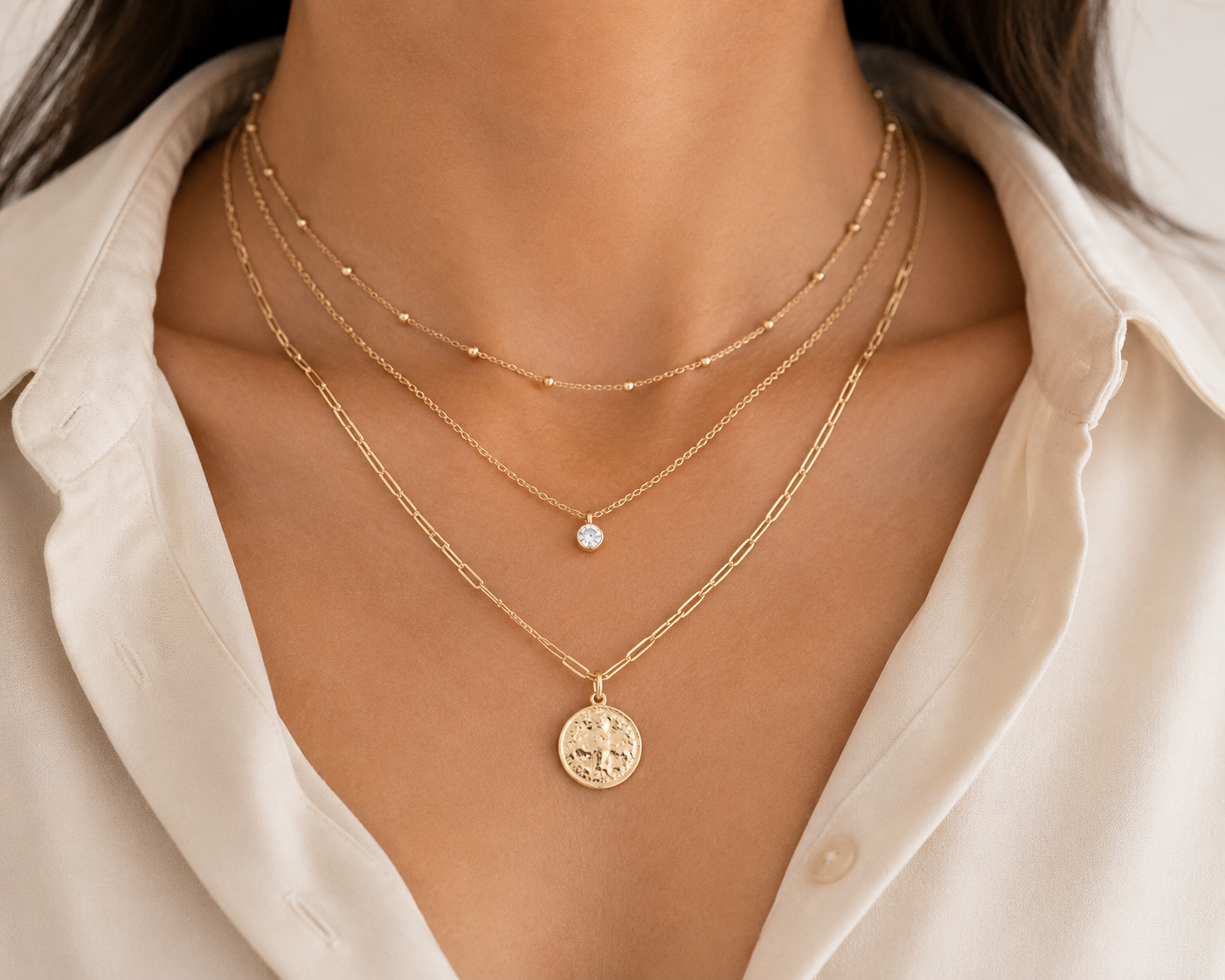
Three necklaces sit at different lengths: one sits near the collarbone, one at mid-chest, and one lower. Pendants vary in size—small diamond, medium pearl, larger coin. This progression creates visual interest without chaos.
Length Variation Is Non-Negotiable
Layer a 16-inch choker with an 18-inch mid-length chain and a 24-inch longer piece. This creates natural spacing. Moreover, it prevents tangling completely. Different lengths prevent your necklaces from competing. Each one has its own space on your chest. Furthermore, this spacing makes every piece visible.
Pendant Size Matters
If you’re wearing three necklaces, vary your pendant sizes intentionally. Small on the shortest chain. Medium on the mid-length piece. Larger or no pendant on the longest piece. This creates visual balance. Conversely, three similar-sized pendants on different lengths can look unintentional. Therefore, vary sizes deliberately.
Metal Coordination for Necklaces
All three should be the same metal family. The Art of Minimalist Gold Jewelry teaches that consistency creates elegance. Therefore, if you’re mixing metals, do so sparingly. Two gold chains plus one rose gold works well. However, gold, silver, and rose gold together starts to feel cluttered. Metal consistency is the foundation of a polished layered look.
Building Your Necklace Layering Skills
Master layering two necklaces before you attempt three. A short delicate chain with a longer pendant chain is the classic beginner combo. Additionally, this combination works with virtually any outfit. Once you’re comfortable, add a third piece gradually. Therefore, start simple and progress thoughtfully.
Consider Your Neckline Choice
Layering works best with open, simple necklines. Crew necks and collars fight with layered necklaces. V-necks and scoop necks frame layered necklaces beautifully. Furthermore, avoid layering with busy patterns. Embellished necklines compete with jewelry. Therefore, let your jewelry be the statement piece.
Creating Your Complete Jewelry Look
Now bring it all together. Bracelets, rings, necklaces, and earrings working in harmony. This is where quiet maximalism lives—multiple pieces that feel intentional rather than excessive.
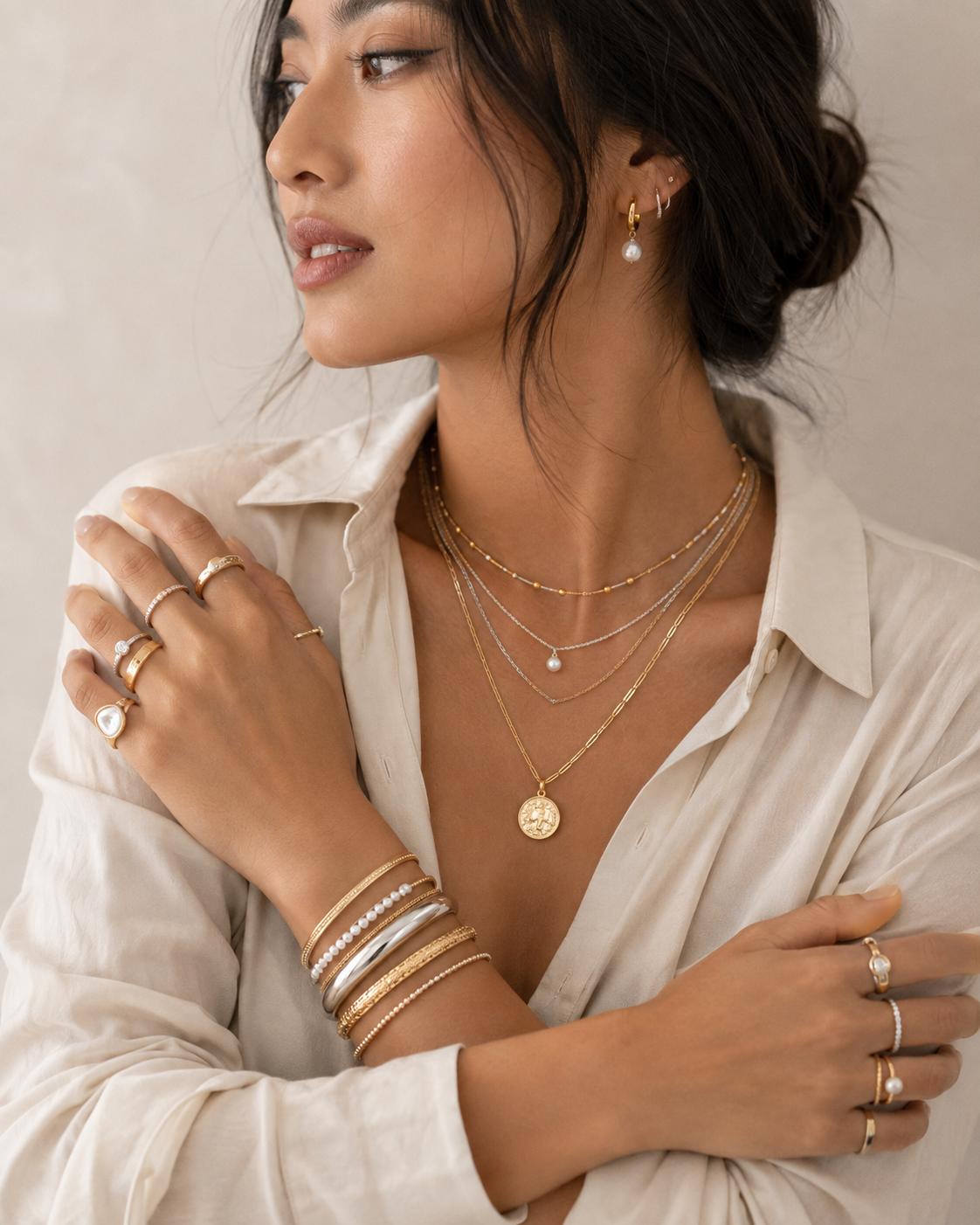
This complete look shows all elements working together beautifully. Three necklaces layer on the chest. Four bracelets stack on the wrist. Five rings distribute across both hands. Pearl drop earrings add subtle sophistication. Every piece is warm-toned gold and pearls.
Undertone coordination is your foundation. Cool undertones wear all silver, white gold, pearls, and diamonds together. Warm undertones wear all gold, rose gold, golden pearls, and warm gemstones. This consistency allows you to layer confidently. How to Style Gold Jewelry With Casual Outfits demonstrates how consistent metal choices create polished looks. Therefore, choose your undertone first. Then build everything within that family.
Balance across all pieces matters tremendously. If you’re wearing three necklaces, wear fewer rings. If you’re wearing five rings, wear just one delicate bracelet. The eye can only process so much visual information. Therefore, distribute your statement pieces. This prevents overwhelming any one area. Moreover, strategic distribution looks intentional.
Repetition creates cohesion in complete looks. If you use pearls in your necklace, repeat them in your bracelets or rings. If you use gold chains on your neck, echo chains on your wrist. Repetition tells your brain these pieces belong together. Moreover, it makes your layering look intentional. Furthermore, visual repetition unifies your entire look.
Quality over quantity applies here too. Wearing fewer high-quality pieces that coordinate beautifully beats wearing many pieces that clash. Coordinated layering that tells a story looks more sophisticated. Therefore, take time to choose pieces carefully. This thoughtfulness shows in your final look.
Start simple and build gradually. Begin with layered necklaces only. Once you’re comfortable, add bracelet stacking. Then introduce rings. Building gradually helps you understand what feels balanced. Moreover, you’ll discover your personal layering style. Additionally, you’ll learn which combinations feel effortless.
The Power of Intentional Jewelry Layering
Jewelry layering isn’t about wearing everything at once. It’s about choosing pieces that complement each other. It’s about understanding your undertone. It’s about balance and intention in every combination.
When you master these principles, your jewelry collection becomes infinitely more versatile. Each piece works harder for you. A single bracelet becomes stunning. Two bracelets become sophisticated. Three or four create a complete, polished look. Therefore, invest in pieces that work within your undertone family. You’ll wear them more often. You’ll feel more confident every time.
Start with one type of layering: necklaces, bracelets, or rings. Master that first. Then expand to layering all three together. Once you understand the foundational principles—length variation, metal consistency, undertone harmony, and intentional balance—you’ll never feel confused. Your collection will tell a cohesive story. Your looks will feel polished. Every layered combination becomes one you’re proud to wear.