

Eye color matters. But undertone matters more.
You’ve already learned how to identify your undertone. You know which clothing colors make you glow. Now apply the same color harmony principle to eye makeup. The right eyeshadow colors make your eyes brighter. They make your eyes larger. They make your face look intentional. The wrong ones? They wash out your complexion. They look muddy against your skin.
The science is straightforward: your undertone determines how your eyes perceive color. Therefore, the same eyeshadow shade looks different on cool undertones. It looks different on warm undertones. It looks different on neutral undertones. Choosing eyeshadow colors that harmonize with your undertone is the key. It creates a polished, intentional look every single time.
Disclosure: This post may contain affiliate links. If you make a purchase through them, TheStyleArc may earn a small commission at no extra cost to you. Read our full Affiliate Disclosure.
Eyeshadow Colors for Cool Undertones
If you identified yourself as cool undertone, your power eyeshadow colors are purples. They are plums. They are cool grays. They are silvers. They are roses and cool browns. These shades have blue and red undertones. They echo your natural coloring. They make your eyes pop against your skin.
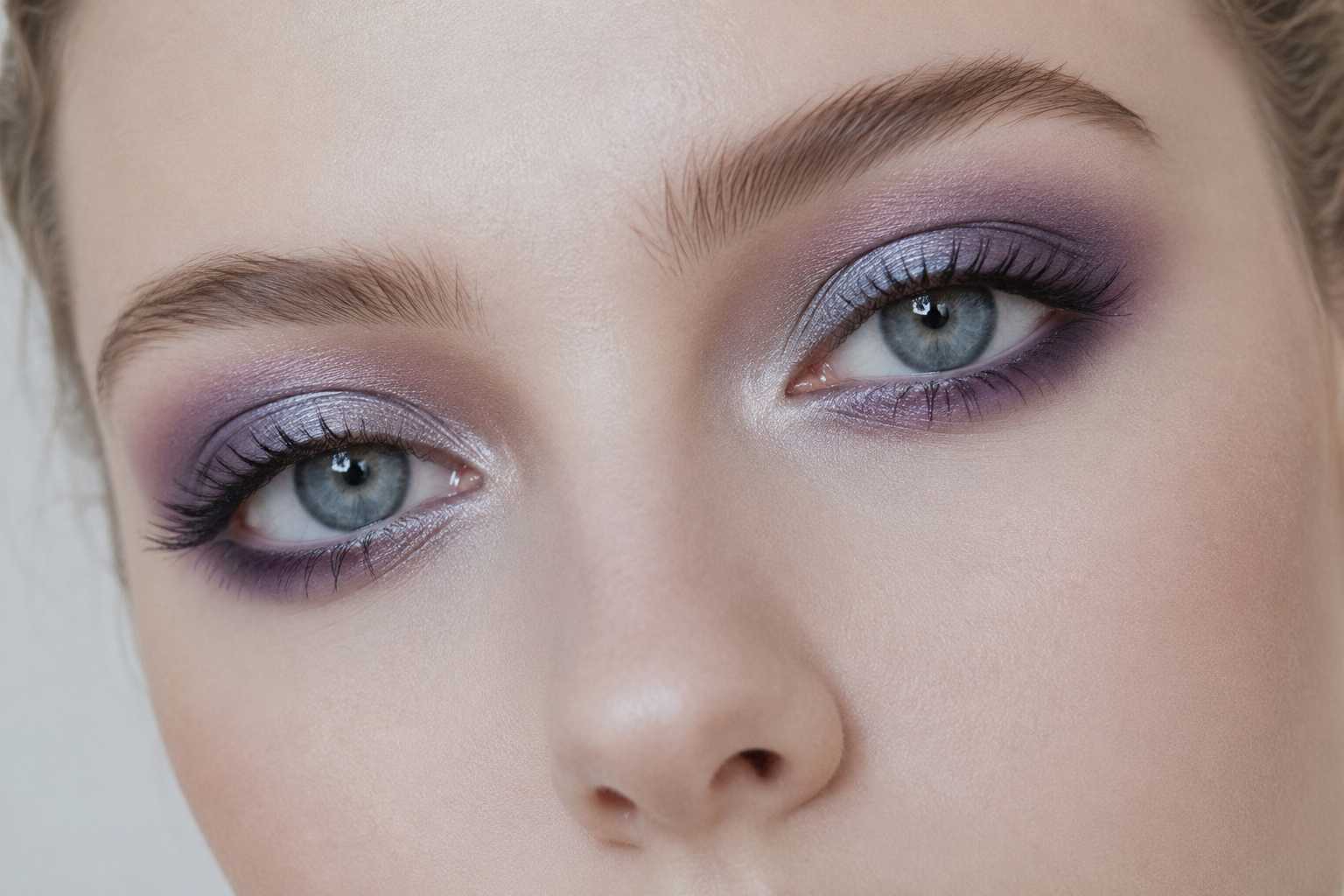
Cool undertones create natural harmony with jewel-toned eyeshadows. The purple and mauve shades shown here bring out the brightness in cool skin. Your eyes appear more luminous and awake.
Deep jewel tones—Purple, Plum, Burgundy, Deep Mauve— are your statement eyeshadow colors. These rich shades make a bold impact. They feel completely natural on cool skin. Purple is your everyday power shade. Deep plum is evening-ready and sophisticated. Moreover, these colors create instant depth. They create drama without looking out of place.
Softer cool shades—Rose, Dusty Rose, Cool Pink, Cool Taupe— work beautifully when you want color without intensity. Dusty rose is particularly flattering on cool undertones. It’s sophisticated and refined. Additionally, these lighter shades work for professional settings. Bold color feels inappropriate in offices. These work there instead.
Metallic and neutral options—Silver, Cool Gray, Cool Brown, Nude Pink— let your eye shape shine. They maintain undertone harmony. Cool browns have a gray undertone. This distinguishes them from warm browns. The key is choosing silvers and cool grays. Don’t choose golden metallics.
Eyeshadow Colors for Warm Undertones
If you identified yourself as warm undertone, your power eyeshadow colors are warm browns. They are bronzes. They are terracotta. They are warm golds. They are peach and warm corals. These shades have golden and orange undertones. They harmonize with your natural warmth. They make your eyes glow.
Deep warm tones—Bronze, Warm Brown, Rust, Deep Terracotta— are your statement eyeshadow colors. These earthy warm shades feel completely natural on warm skin. Bronze is your everyday power shade. Rust and warm brown are evening-ready and grounded. Furthermore, these colors create beautiful dimension. They create warmth that photographs beautifully.
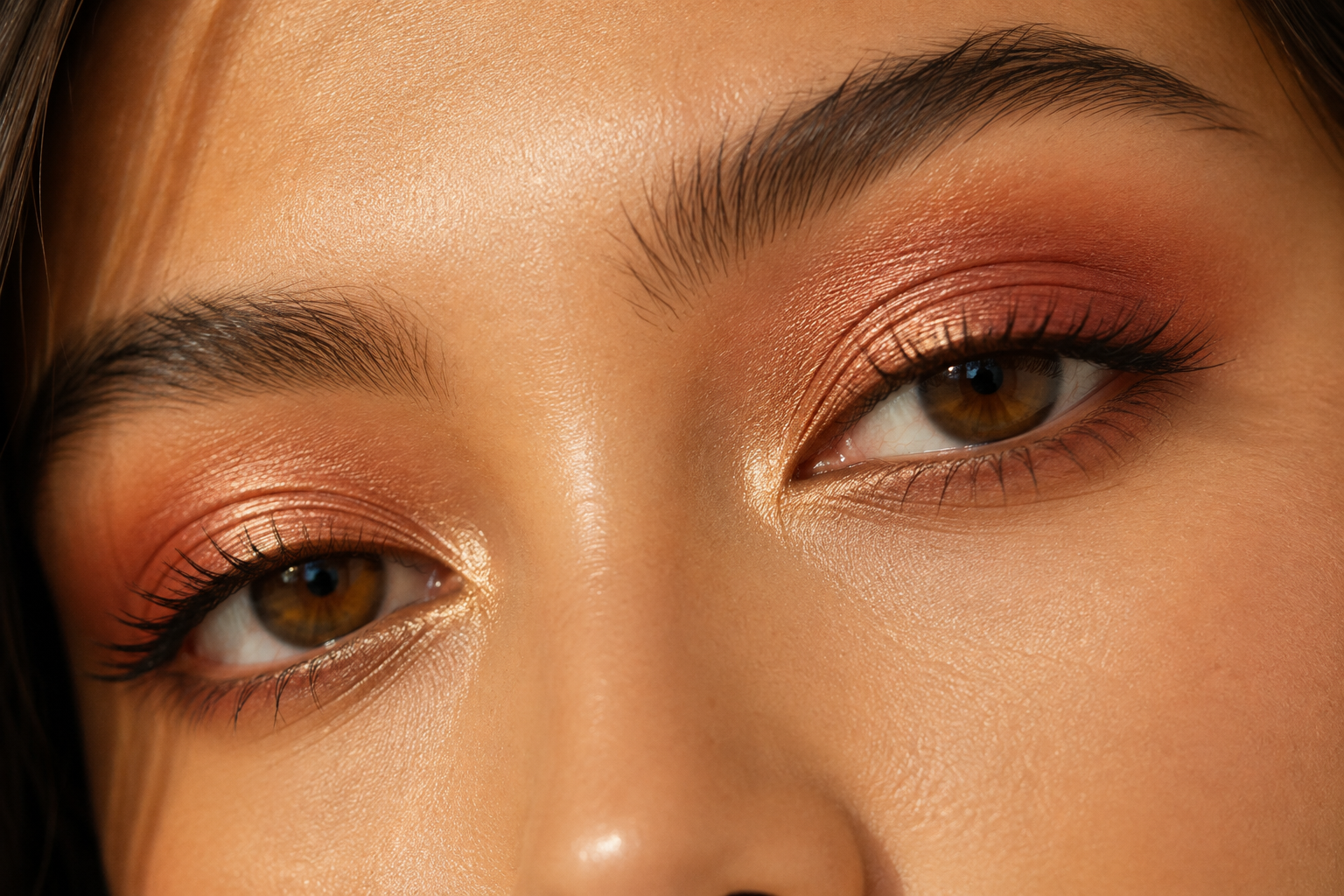
Warm undertones shine with golden and bronze eyeshadows. The warm orange-bronze tones shown here complement warm skin beautifully. Your eyes appear warm, radiant, and naturally enhanced.
Bronze is the warm undertone equivalent of cool purple. It makes a bold professional statement. It harmonizes perfectly with warm skin. Terracotta adds earthiness and sophistication. Moreover, these deep warm shades work beautifully. They work for both everyday wear and evening looks.
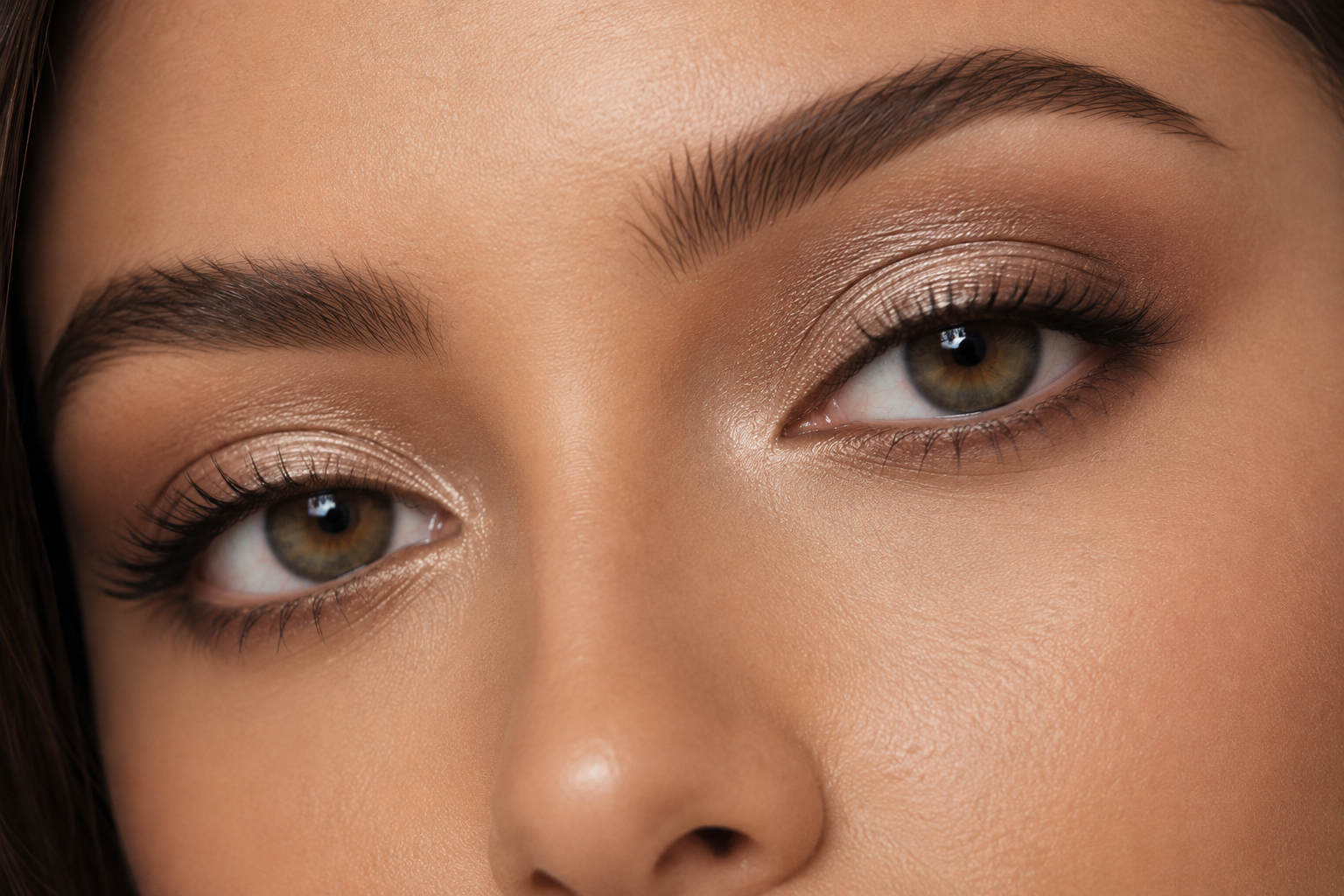
Warm browns and soft taupes work for everyday wear on warm undertones. This image shows how warm-based neutral shades maintain the glow. They work without bold color. They’re perfect for professional and casual settings.
Softer warm shades—Peach, Warm Apricot, Warm Gold, Caramel— work when you want warmth without drama. These have an approachable quality. They feel sun-kissed and effortless. Peach is particularly flattering on warm undertones. Warm gold feels luxurious and wearable.
Metallic options—Gold, Warm Bronze, Rose Gold— enhance warm undertones beautifully. Unlike cool undertones, warm skin looks stunning in golden metallics. The key is choosing warm-based metallics. Don’t choose silvers or cool grays.
Why the Same Eyeshadow Looks Different on Every Undertone
Here’s where color theory gets interesting. The same eyeshadow shade will look cooler on cool undertones. It looks more muted. It looks slightly pink-toned. However, that same shade appears warmer on warm undertones. It appears more golden. It appears richer. This isn’t your imagination. It’s how human eyes perceive color against different backgrounds.
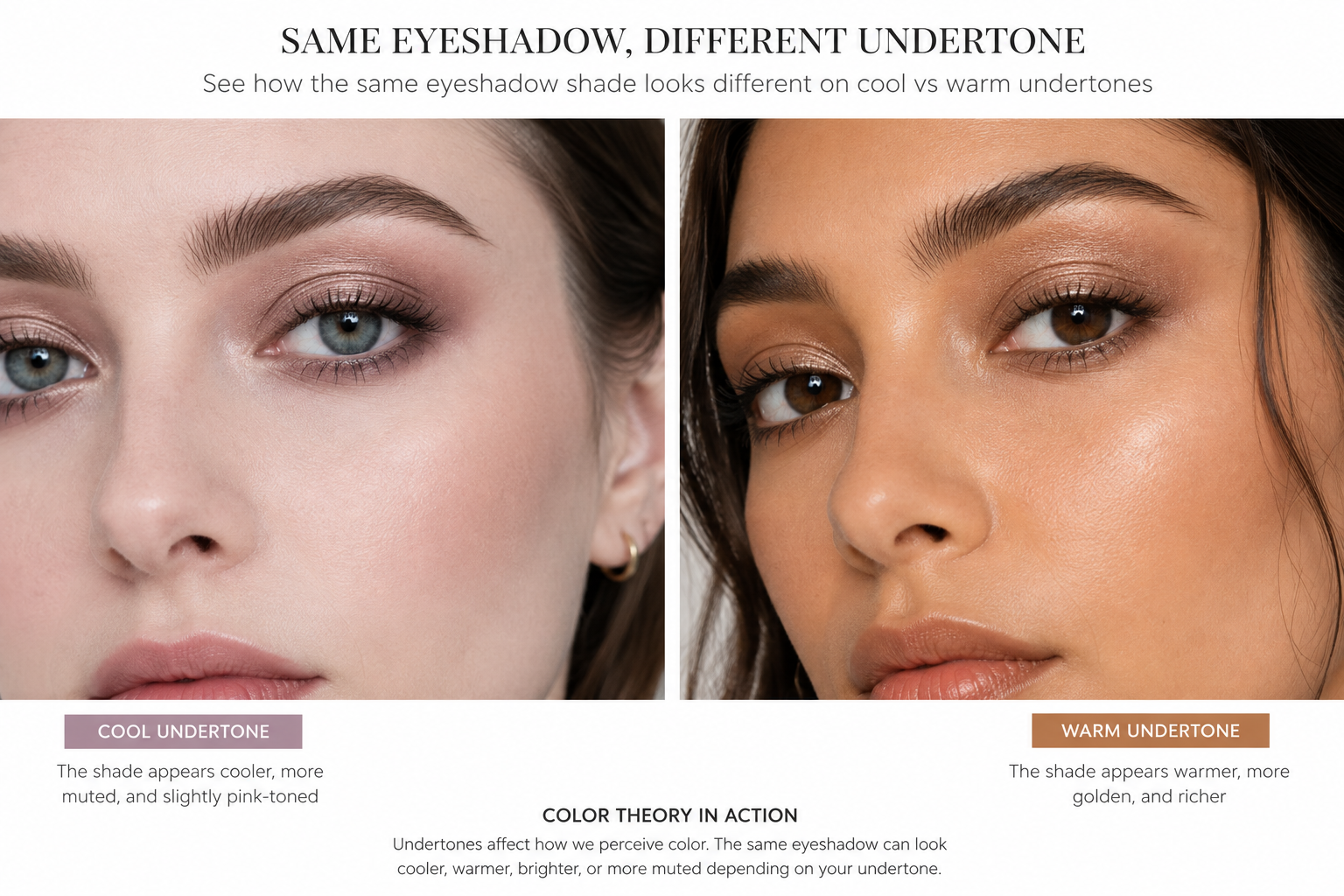
This comparison demonstrates color theory in action. The identical eyeshadow appears cool and muted on the left. It appears warmer and richer on the right. This visual proof shows why your undertone matters. It matters more than the eyeshadow name. Perception is everything.
When you wear eyeshadow that matches your undertone, your eyes appear brighter. The color harmonizes with your skin. Moreover, this harmony creates a cohesive look. It feels intentional and polished. Conversely, wearing an eyeshadow with the opposite undertone can make your eyes look tired. The color can appear muddy.
Understanding your undertone is essential for choosing flattering shades. This is why identifying your undertone matters so much. Once you know whether you’re cool, warm, or neutral, you can shop for eyeshadow with confidence. You’ll know which colors work before you buy them.
Eyeshadow Undertones to Avoid
Cool undertones: Avoid warm oranges. Avoid warm golds. Avoid warm bronze and peachy shades. These warm tones will clash with your undertone. They can make your skin look tired. Additionally, steer clear of overly warm browns. They compete with your undertone. They don’t complement it.
Warm undertones: Avoid cool purples. Avoid cool grays. Avoid silvers and dusty roses. These cool colors can look harsh against warm skin. Furthermore, skip true plums. Skip cool-toned browns. They won’t work as beautifully as warm options.
Neutral undertones: Your advantage is flexibility. You can wear both cool and warm shades. But you’ll look most polished when you commit to one family at a time. Mixing cool purples with warm golds in the same look creates visual confusion.
How to Choose Eyeshadow Colors in Real Life
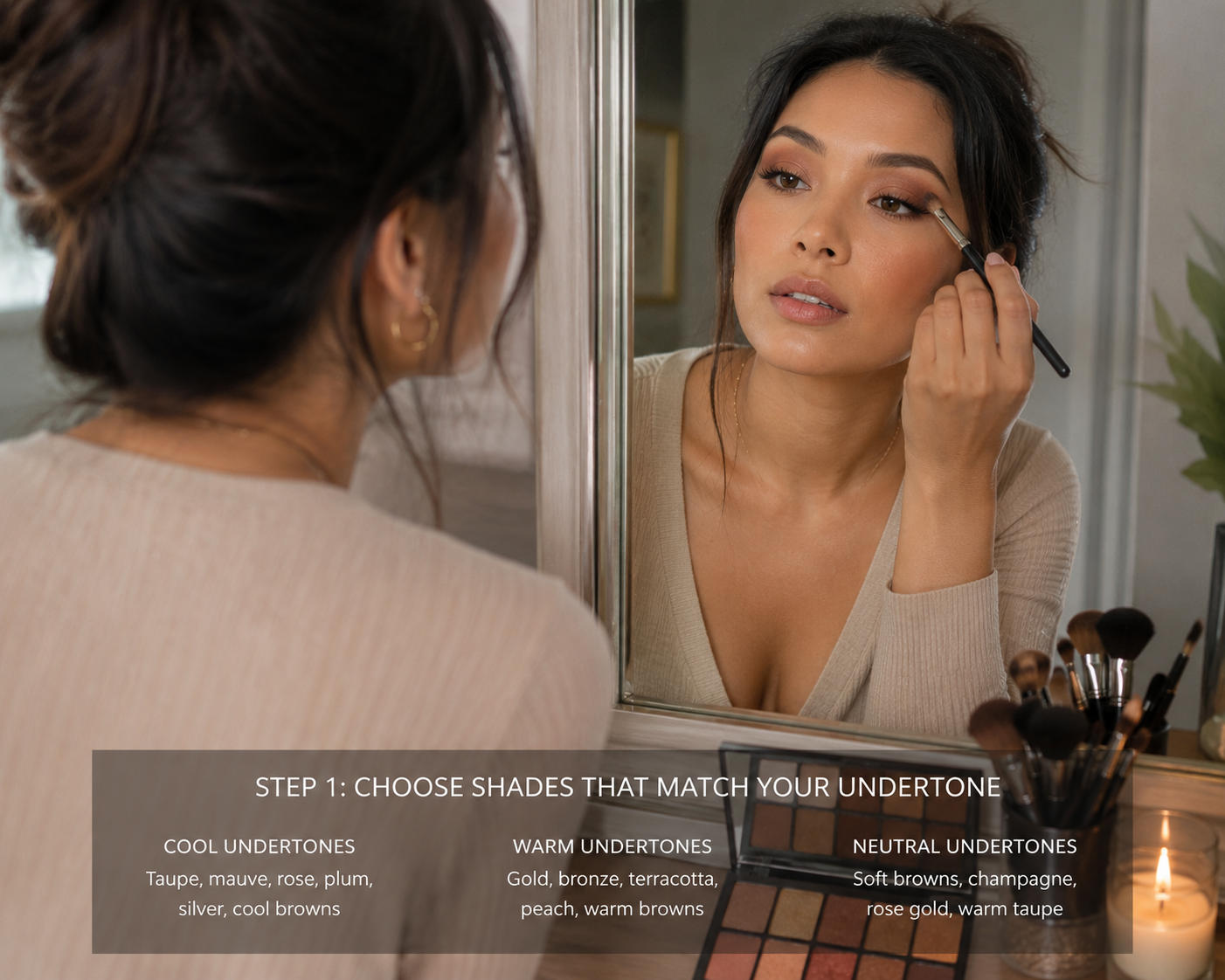
This practical guide shows the color selection process in action. When shopping or applying eyeshadow, reference your undertone’s recommended color family. Cool undertones gravitate toward cool jewel tones and silvers. Warm undertones gravitate toward warm metallics and earth tones. Neutral undertones have flexibility with both families.
Choosing eyeshadow follows the same principle as choosing your color palette. First, identify your undertone. Then shop within the recommended color families. Additionally, test eyeshadow before buying whenever possible. Swatch it on your eyelid in natural daylight if you can.
Ask yourself: Does this eyeshadow make my eye color brighter? Does my complexion look awake and glowing? Or does it look tired? Does the color feel like it belongs on me? Or does it feel like I’m trying too hard? Trust your instinct. If an eyeshadow feels wrong, it probably is.
Eyeshadow Formulas and Finishes
Once you know your undertone, focus on formula quality. Matte, satin, metallic, or shimmer—the finish is personal preference. However, undertone is non-negotiable. A luxury matte eyeshadow in the wrong undertone will still look wrong. A budget-friendly satin eyeshadow in the right undertone will always look better.
Invest in finding eyeshadow formulas that feel good. They should last all day. Look for shades that match your undertone. Then choose your favorite brands and finishes. The undertone is the foundation. Everything else is preference.
Building Your Perfect Eye Look
Eye makeup becomes simple once you understand undertone. When you shop, look for eyeshadow palettes that emphasize your undertone’s color families. If you’re cool undertone, seek palettes with purples, plums, roses, and cool browns. If you’re warm undertone, seek palettes with bronzes, warm browns, golds, and terracottas.
Moreover, consider your eye color as a secondary factor. Cool undertones with blue eyes have incredible color harmony with cool shades. Warm undertones with brown eyes look stunning in warm tones. However, undertone always takes priority over eye color when choosing eyeshadow.
For everyday looks, start with a neutral shade from your undertone family. Use it as a base. Then add depth with a slightly darker shade. Finally, add a pop of color or shimmer in your undertone. This simple three-step process works across every skill level.
As you build your eyeshadow collection, certain brands and formulas work best for your skin. You may discover that you prefer matte for everyday and shimmer for evening. These preferences are all valid. The only non-negotiable element is undertone harmony. Undertone should always take priority over trends.
The Power of Undertone-Matched Eyeshadow
Your perfect eyeshadow is waiting. It’s the color that matches your undertone. It makes your eyes appear brighter. It makes your skin glow. It makes your whole face look intentional and polished. When you wear eyeshadow that harmonizes with your undertone, you’re not just wearing makeup. You’re enhancing your natural beauty.
The difference is noticeable. People will compliment your eyes. They may not know why. Your eyes will look bigger. They’ll look brighter and more awake. This is the power of understanding color theory. It’s the power of applying it to your personal style. Therefore, take time to explore the eyeshadow colors that work for your undertone. Your eyes deserve the best frame possible.
Start with one palette that matches your undertone. Wear it for a week. Notice how your eyes look. Notice how you feel. Once you experience the difference that undertone harmony makes, you’ll never shop for eyeshadow the same way again.