

From Undertone to Color: Your Golden Advantage
In Part 1, you identified yourself as warm undertone. Your blood runs golden-red, your veins show green or olive-toned, and your skin has those natural yellow, golden, or peachy undertones that show through. That’s your superpower.
The best colors for warm undertones are those that match your skin’s natural warmth. Warm undertone color matching works on a straightforward principle: colors with golden or warm undertones align with your complexion. When you wear the right colors, they echo your natural glow instead of competing with it. The result: you look more radiant, more sun-kissed, and effortlessly warm—the way you’re naturally meant to glow.
This is where things get fun. Let’s dive into your color palette.
Disclosure: This post may contain affiliate links. If you make a purchase through them, TheStyleArc may earn a small commission at no extra cost to you. Read our full Affiliate Disclosure.
Your Power Colors: Earth Tones and Golden Hues
Caramel, chocolate, terracotta, rust, goldenrod, warm orange—these aren’t just pretty colors. They’re your foundation. Earth tones for warm skin are rich, grounded colors with natural warmth. On warm undertones, they don’t just sit on your skin; they become part of it, making your complexion look alive and your presence magnetic.
When you understand earth tones for warm skin, you’ve unlocked the secret to effortless color matching. These are the colors that work hardest for you.
Caramel: The Warm Brown That Glows
Caramel is warm brown at its finest—rich, luxurious, and undeniably golden. When you wear caramel, your skin doesn’t just look warm; it looks luminous. Your natural glow amplifies, and the color creates a seamless extension of your complexion. This is the brown that makes warm undertones shine.
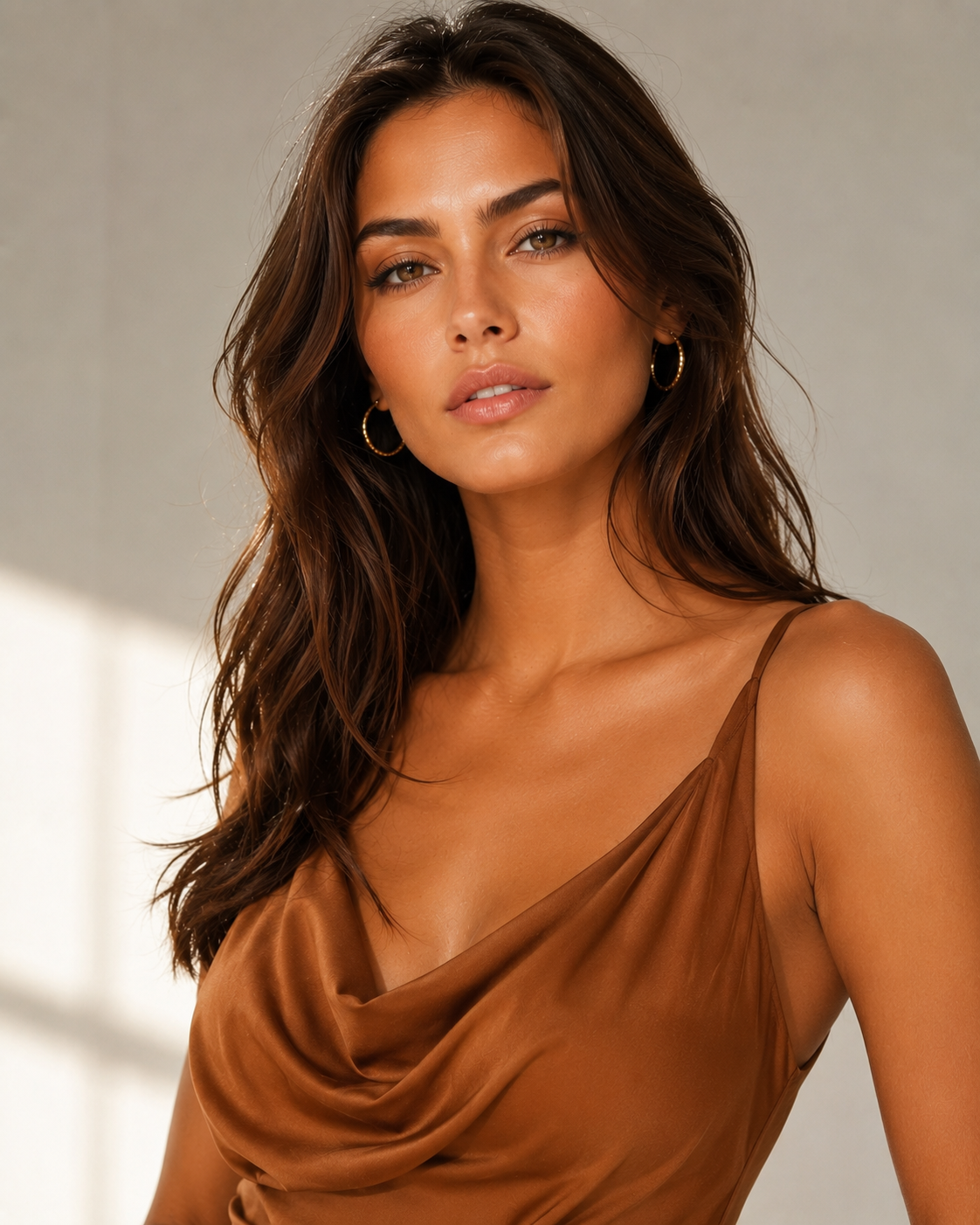
Notice how the caramel brown makes the skin glow from within. This is the alignment between warm color and warm skin.
Warm Orange: The Color That Feels Natural
Warm orange isn’t neon or artificial. It’s a peachy, golden-toned orange that sits naturally against warm skin. This isn’t a color that looks painted on; it looks like an extension of your sun-kissed glow. Wear it and you look not just warm but alive—like you just came back from somewhere golden.

Warm orange on warm skin creates a radiant, sun-kissed effect. The color harmonizes rather than competes.
Warm Red: Your Statement Color
Just like cool undertones own true red, warm undertones own warm red. This is red with golden or orange undertones—not the blue-based cool red that can look harsh on warm skin. Warm red is the red that makes you feel powerful and golden. It’s sophisticated, never cold.
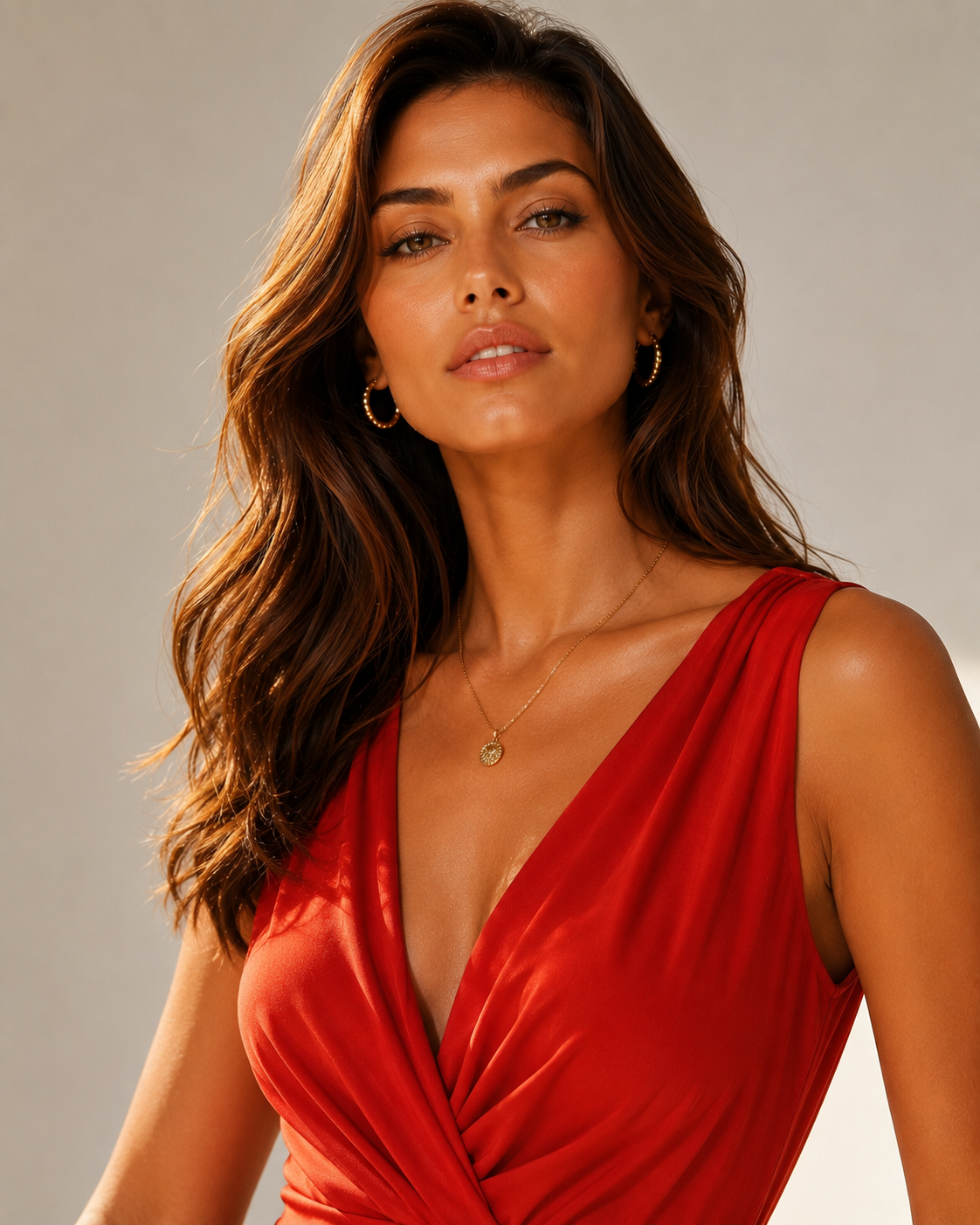
Warm red on warm undertones is commanding. The color feels golden and confident, not cool or distant.
Goldenrod & Gold: Your Signature Tones
Goldenrod sits between yellow and orange with a rich, golden undertone. It’s not bright or artificial; it’s luxurious. This color makes warm undertones look golden and intentional. If there’s a color that was made for warm skin, this is it. Deep gold, warm tan, and sunny yellows round out this category—all colors that celebrate your natural warmth.
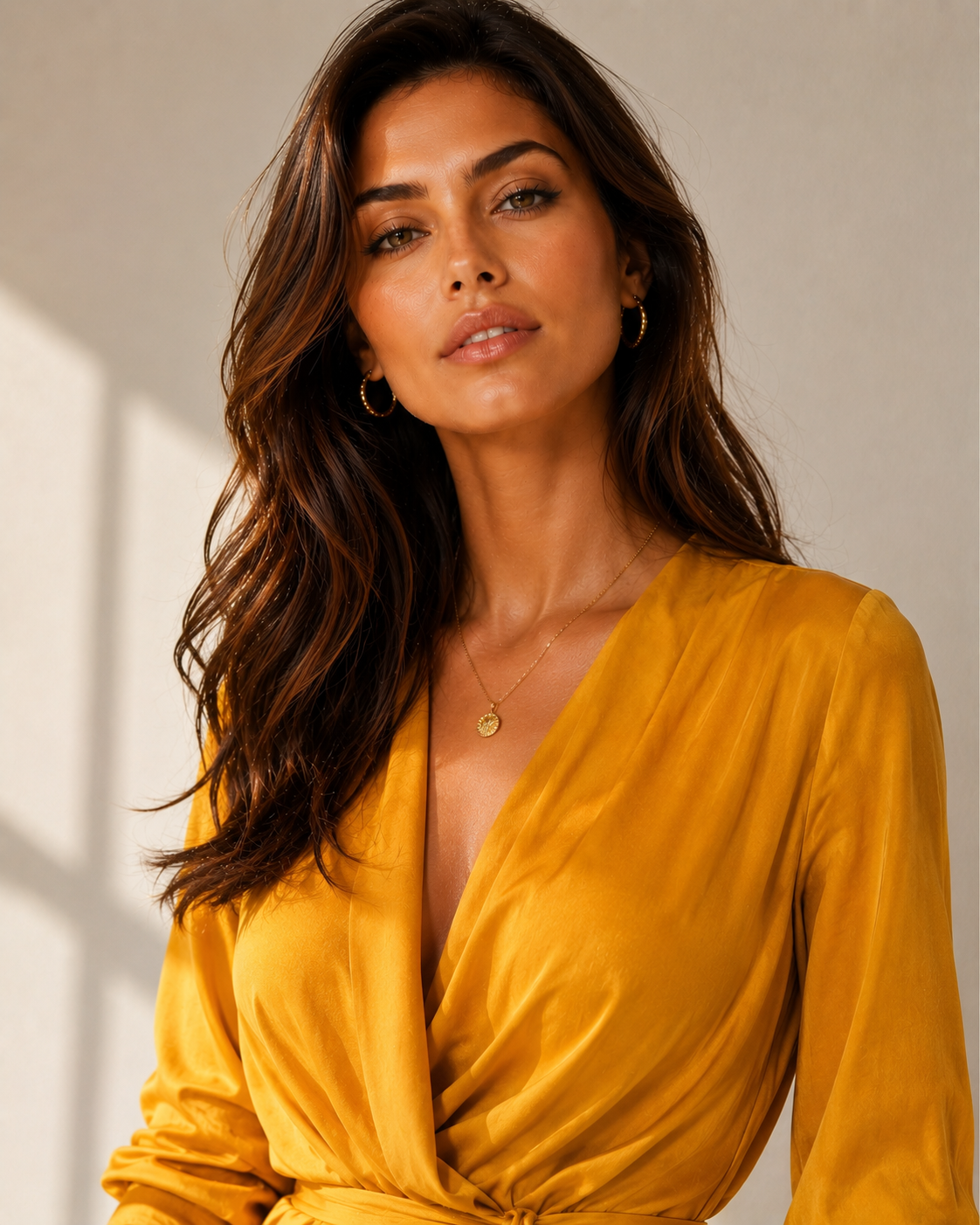
Goldenrod and warm yellow tones make warm skin look golden and luminous. These are your signature colors.
Warm Pink: Soft But Confident
This is peach pink, coral pink, and warm rose—pinks with golden or peachy undertones, not cool mauve or dusty rose. Warm pink on warm undertones has a delicate sophistication that still holds strength. It’s soft in texture but commanding in presence.
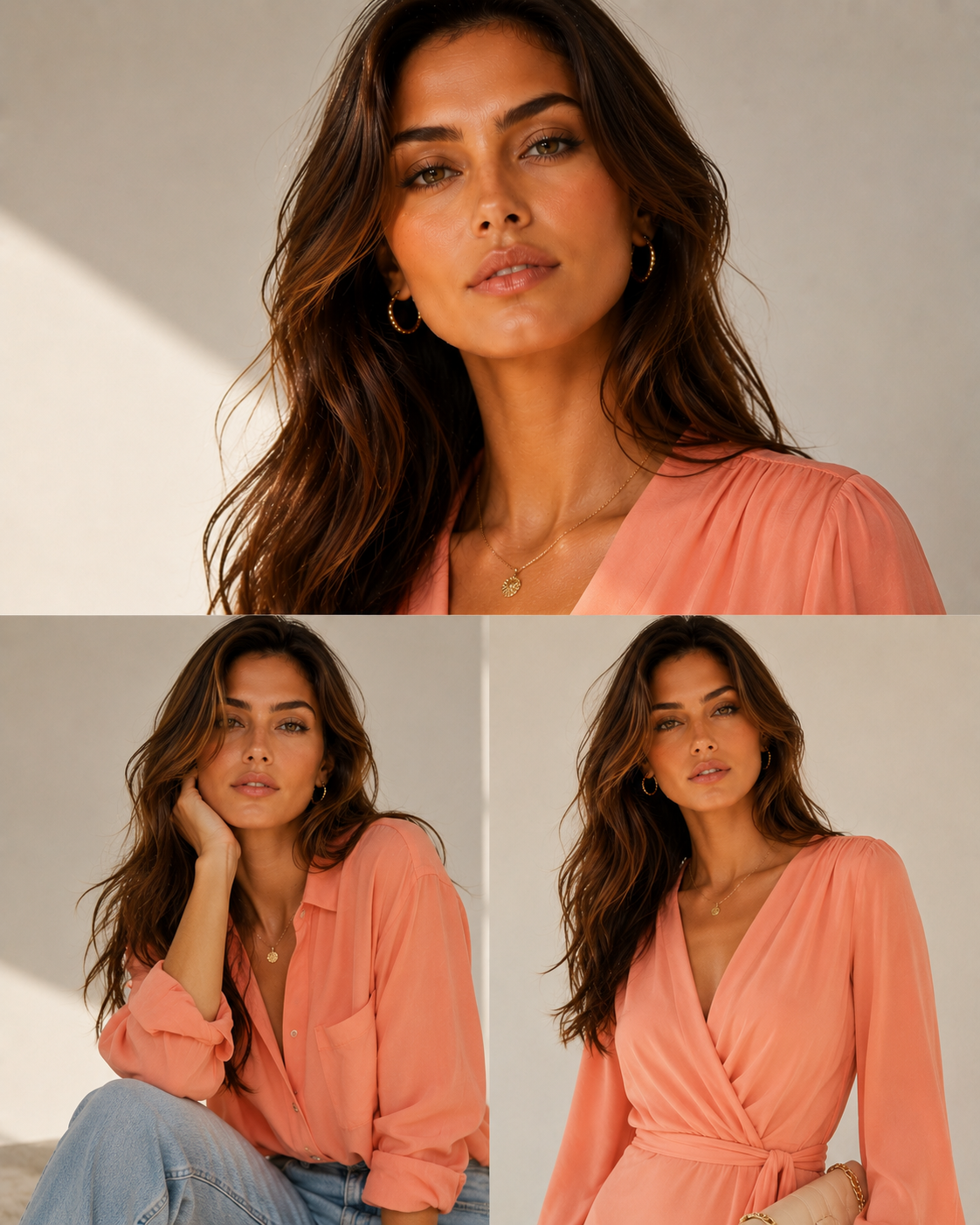
Warm pink isn’t delicate in the sense of being weak. It’s warm, inviting, and has real presence on warm skin.
The Neutrals That Ground You
For neutrals, warm undertones need warm black and cream—not cool black or pure white. Warm gray should have golden or brown undertones rather than blue. Taupe is your version of gray, holding that warm grounding without coldness. These aren’t backgrounds; they’re active partners in making your other colors sing.
The Science of Why This Works
Every color has undertones—warm, cool, or neutral. When a color’s undertone matches your skin’s undertone, they don’t compete. Instead, they harmonize. This is the foundation of any warm skin color guide: your golden-red blood, your peachy-toned complexion, your naturally warm coloring—all of this means warm colors literally reflect off your skin in a way that cool colors don’t.
Understanding undertone science isn’t just fashion theory. It’s color physics. Warm colors + warm skin = natural harmony. That harmony is what makes you look effortlessly pulled together, every single time.
What About Colors Outside Your Palette?
Can you wear cool colors? Technically, yes. But cool blues, cool reds, and icy pastels don’t work with you the way warm colors do. They work against you, competing for the same space on your skin. The result is that you look tired, or the color looks off, or something just feels wrong even though you can’t put your finger on it.
That feeling? That’s color theory telling you something. Listen to it.
You Now Know Your Colors. What’s Next?
You’ve completed Part 3 of TheStyleArc’s undertone series. You know your colors. You know why warm tones work for you. You can feel confident walking into any store knowing which shades will make your skin glow.
But knowing your color palette and knowing how to wear those colors into your daily life are two different things. Part 4 of this series—The Perfect Lipstick Color for Your Undertone—teaches you how to apply this knowledge to makeup, starting with the most transformative product you can wear.
Turn to Part 4 and find the “Lipstick Colors for Warm Undertones” section. Because a color you wear close to your face? That amplifies everything. Knowing your undertone makes all the difference between a lipstick that looks wrong and one that looks like it was made for you.
Let’s make it count.
Part 1: Identify your undertone. Part 2: (If you’re cool undertone). Part 3 (you’re here): Discover your palette. Part 4: Apply to makeup. This series is designed to build. Each guide makes the next one more powerful.