

What is skin undertone?
Your skin’s undertone is the subtle color beneath the surface—separate from your skin tone (light, medium, or deep). It’s determined by the mix of colors in your blood vessels and melanin, and it stays the same throughout your life, even if your skin tone darkens or lightens.
There are three undertone categories: cool, warm, and neutral. Knowing which one you are changes everything about how colors work on you—not just for your wardrobe, but for makeup, jewelry, and every color decision you make.
This is Part 1 of TheStyleArc’s undertone series. After you identify your undertone here, we’ll guide you to:
- Part 2 & 3: Your complete color palette—specific shades that make you glow
- Part 4: Apply your undertone knowledge to makeup—starting with lipstick
Let’s start by finding your undertone. It’s easier than you think.
Disclosure: This post may contain affiliate links. If you make a purchase through them, TheStyleArc may earn a small commission at no extra cost to you. Read our full Affiliate Disclosure.
Test 1: Look at your wrist veins
The easiest way to spot your undertone is to look at the veins on your inner wrist in natural daylight. This test works because blood vessels show through the skin, and the color they appear reveals your undertone. The difference can be dramatic—when you see it, you’ll know immediately.
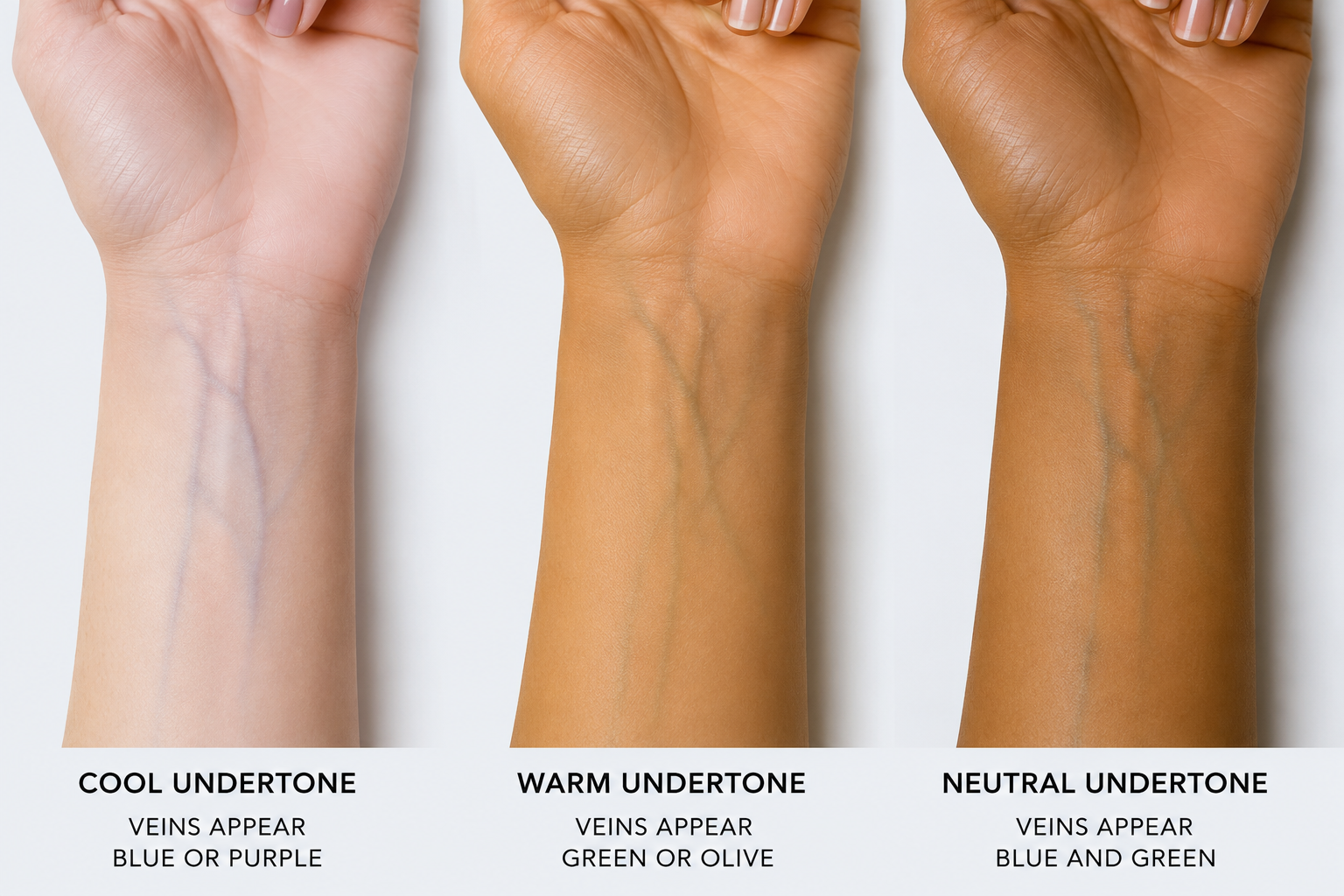
The three panels show exactly what to look for: cool undertones display blue or purple veins, warm undertones show green or olive veins, and neutral undertones show a visible mix of both blue and green.
- Cool undertone: Your veins appear distinctly blue or purple. This is unmistakable—the cool pigments in your blood create an obviously cool color that you can’t miss.
- Warm undertone: Your veins look greenish or olive-toned. This is equally clear—the warm pigments create a green or golden appearance that’s visibly different from cool veins.
- Neutral undertone: You see both colors. Some veins appear blue, others appear green, and they’re genuinely hard to distinguish as one or the other. This mixed appearance is the telltale sign of a neutral undertone.
Pro tip: Check both wrists in natural daylight, not under indoor lighting. Compare your veins to the three examples in the image. If your veins look like the left panel, you’re cool. If they match the middle panel, you’re warm. If they’re a mix like the right panel, you’re neutral.
Test 2: Which metal makes you glow—gold or silver?
This is the jewelry test, and it’s powerful. Stand in front of a mirror in natural light and hold a gold piece (a ring, bracelet, or necklace) close to your face. Observe how it sits against your skin—does it make you look alive, or does it feel heavy and wrong? Then switch to silver and watch the shift. The difference should be obvious, not subtle.
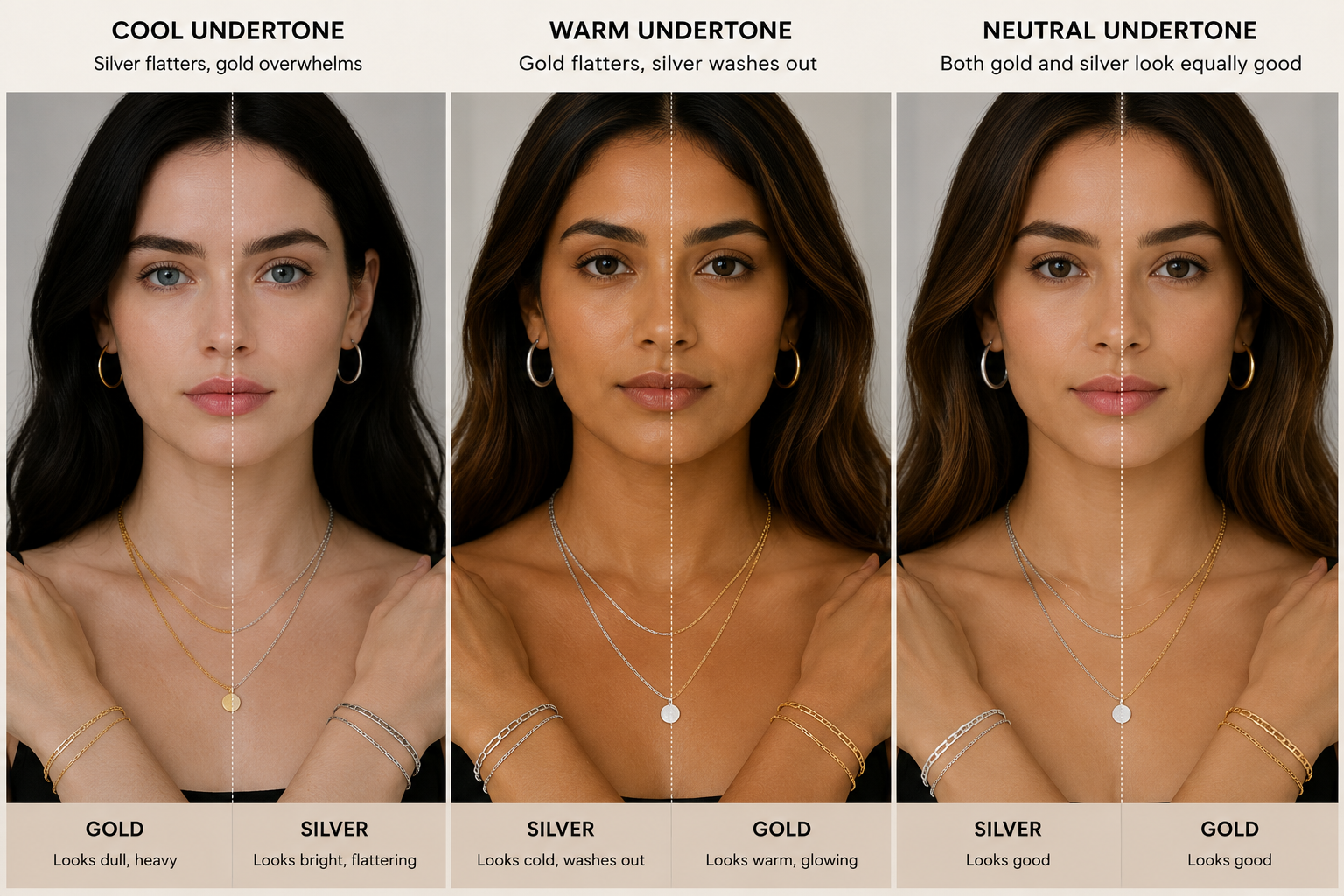
The three panels show the dramatic difference metals make on each undertone: cool skin glows with silver and looks drained by gold; warm skin glows with gold and looks washed out by silver; neutral skin looks good in both metals equally well.
- Cool undertone (left panel): Silver is your power metal. When you wear silver, your complexion looks sharp, bright, and radiant. Gold, by comparison, looks heavy and yellowish—it actually drains the glow from your skin and can make you look tired or dull.
- Warm undertone (middle panel): Gold is your winner. When you wear gold, your skin glows from within and looks warm and harmonious. Silver, meanwhile, feels cold and harsh—it makes your complexion appear washed out, sallow, or disconnected from the jewelry.
- Neutral undertone (right panel): This test might not give you a clear answer—and that’s the sign you’re neutral. Both gold and silver look equally flattering. Your skin works beautifully with both metals, so wear whichever you prefer based on style, not undertone.
Test 3: How does pure white look on you?
White is a mirror. It’s unforgiving and honest about what it reflects. Drape a piece of pure white—a white t-shirt, white scarf, or white fabric—near your face in natural daylight. Don’t wear it yet. Just hold it close and look in the mirror. See how white interacts with your complexion. The effect should be noticeable—white either enhances or competes with your undertone.
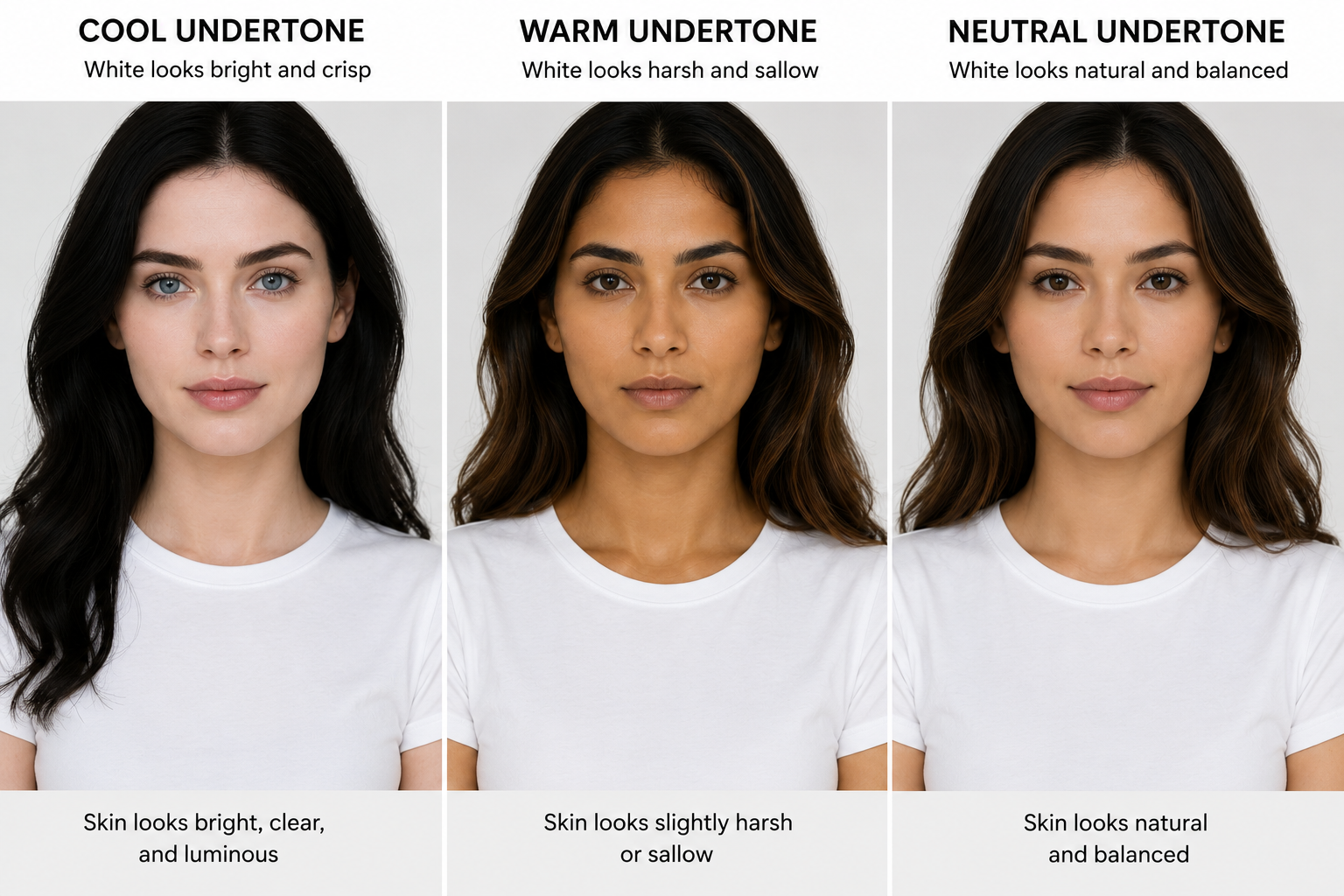
The three panels clearly show how pure white affects each undertone: cool skin looks bright and luminous; warm skin can look slightly harsh or sallow by comparison; neutral skin looks natural and balanced in white.
- Cool undertone (left panel): Pure white looks fantastic on you. The white fabric feels bright and fresh, makes your face look luminous and awake, and amplifies your natural clarity. White is one of your best neutrals—wear it with confidence.
- Warm undertone (middle panel): Pure white might feel slightly harsh or make your skin look less warm than it actually is. Off-white, cream, or ivory tones feel softer and more flattering—they work with your natural glow instead of competing with it.
- Neutral undertone (right panel): Both pure white and off-white work on you without obvious issues. Your undertone isn’t fighting either option. If you prefer one over the other, that’s just personal style—your skin will look good in both.
Pro tip: Hold cream-colored fabric next to the white at the same time. Compare them directly. The contrast shows you instantly which your undertone favors.
Test 4: Understand your base skin undertone
Your undertone is the base color reflected in your skin, independent of how light or dark your surface tone appears. Think of it as the canvas underneath. The three color circles in this image show what to look for—each represents the actual undertone color you’d find on each skin type.
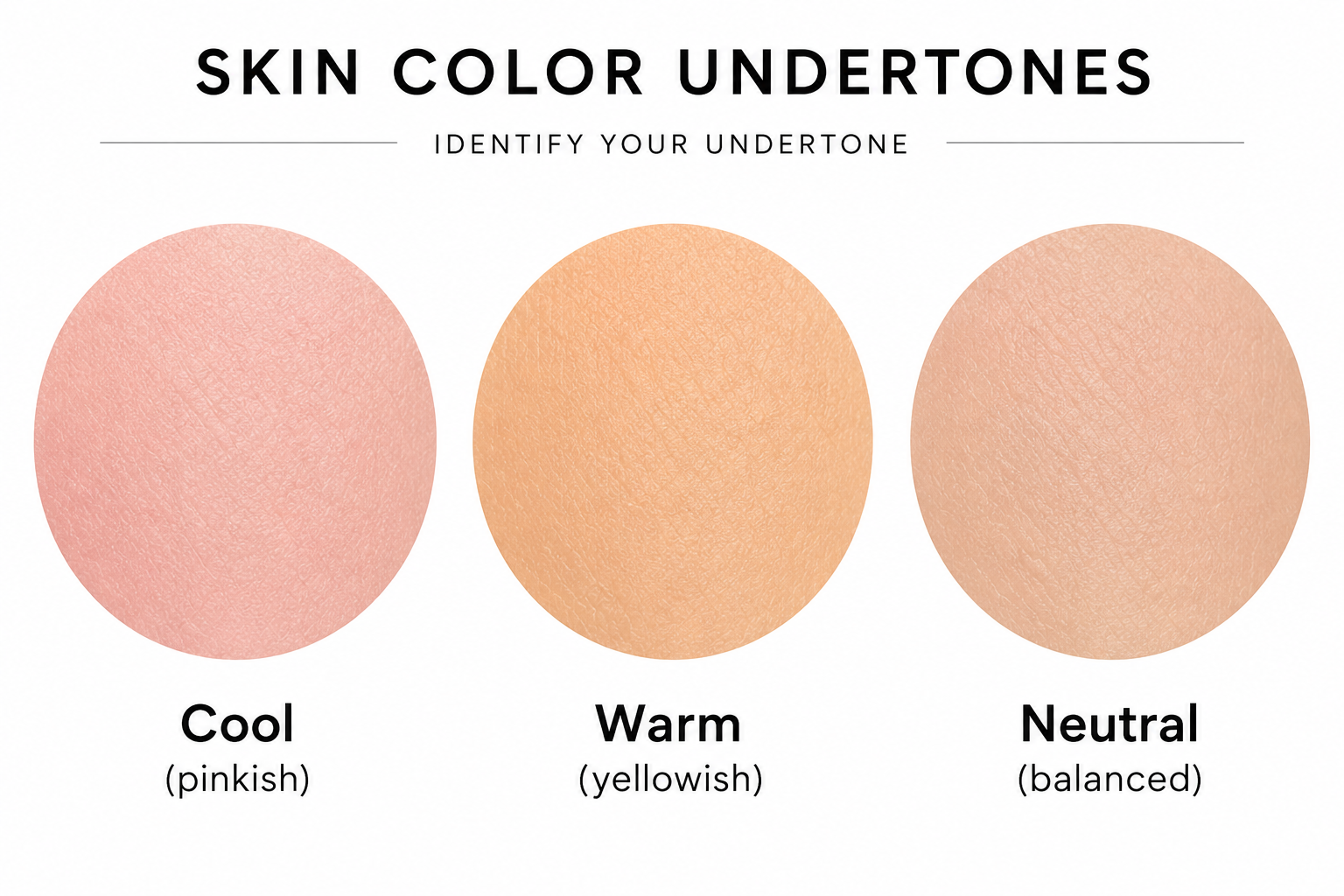
The three circles show the actual undertone colors: cool undertones have a pinkish base, warm undertones have a yellowish or golden base, and neutral undertones show a balanced mix of both pink and yellow.
- Cool undertone (left circle): Your skin naturally displays a pinkish base color (as shown in the left circle). This comes from pink, red, or bluish undertones showing through your skin. You likely burn easily in the sun and rarely achieve a deep bronze tan.
- Warm undertone (middle circle): Your skin has a yellowish or golden base color (as shown in the middle circle). This comes from yellow, golden, or peachy undertones. You tan easily to a warm bronze or golden shade without severe burning.
- Neutral undertone (right circle): Your skin shows a balanced mix of both pink and yellow undertones (as shown in the right circle). You tan gradually without burning drastically or turning deeply golden—you’re naturally in the middle.
You’ve Found Your Undertone—Now What?
Congratulations. You now know whether you’re cool, warm, or neutral. This is the foundation. But knowing your undertone is just the beginning—the real magic happens when you apply it to actual colors.
Your Next Steps
If you’re a cool undertone: Your power colors are jewel tones, cool reds, and true blacks. But which shades specifically work best on you? Read The Ultimate Color Palette Guide for Cool Undertones to discover your complete 24-color palette and see them in action on real people.
If you’re a warm undertone: Your power colors are earth tones, warm oranges, and golden neutrals. But which exact shades make you glow? Read The Ultimate Color Palette Guide for Warm Undertones to discover your complete 24-color palette and see them in action on real people.
If you’re a neutral undertone: You have options. Read both guides above and see which palette resonates with you more—or embrace that you can wear both. The choice is yours.
Then Move to Makeup
Once you’ve completed your color palette guide (Part 2 or 3), you’ll be ready for Part 4: The Perfect Lipstick Color for Your Undertone. This guide will show you how to apply your undertone knowledge to makeup—starting with lipstick, which is one of the most transformative beauty products you can wear.
The undertone system works. Once you understand your undertone and your colors, every shopping decision becomes clearer. You’ll stop second-guessing yourself and start choosing with confidence.
Ready to take the next step? Start with your color palette guide, then move to makeup. This series is designed to build on itself—each guide makes the next one more powerful.